The Soul of Andhra in a Pot: Mastering Authentic Vijayawada Chicken Biryani
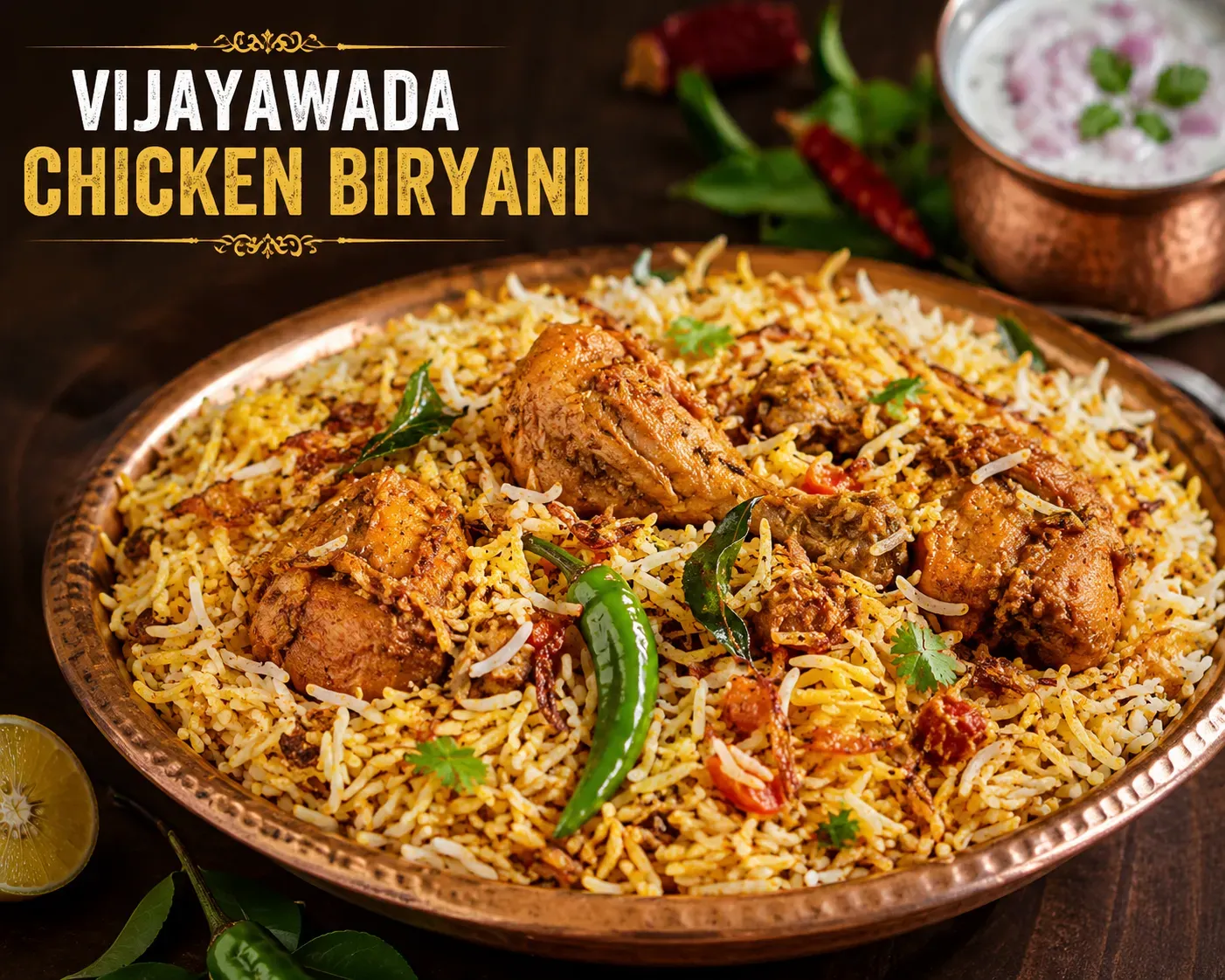
You haven’t truly tasted Andhra cuisine until you’ve dug a long-handled spoon into a steaming pot of Vijayawada chicken biryani. This isn’t just another rice-and-meat dish; it is a fiery, aromatic celebration spiked with green chilies, curry leaves, and a distinct spice blend you won’t find in a Hyderabadi kitchen. The moment those fragrant grains hit your palate, carrying the heat of Guntur spices and the tenderness of perfectly marinated country chicken, you understand the obsession. Forget bland, subtle flavors—this biryani commands attention. If you crave a dish that balances robust heat with deep umami, you are about to meet your match.
Why Vijayawada Chicken Biryani Stands Apart from the Rest
The landscape of Indian biryani is vast, but the Vijayawada chicken biryani occupies a special, irreverent corner. Unlike the rich, saffron-laced Awadhi versions, this is rustic, pungent, and thrilling. Cooks in the Vijayawada region traditionally favor a short-grain rice called Kala Jeera or Jeeraga Samba, which absorbs the potent masala without turning mushy. The true difference lies in the chili heat. The recipe relies heavily on locally sourced Guntur chili paste, which provides a sharp, clean burn rather than a smoky flavor. Furthermore, the heavy use of fresh curry leaves and green chilies in the tempering creates an aromatic base that is distinctly South Indian, making this a wetter, more intensely flavored “pulao-style” biryani that still relies on the classic dum cooking method.
The Maestros of the Pot: Culinary Influences in the Region
To truly understand the benchmark of the best Vijayawada chicken biryani, we look to the city’s legendary kitchens. Establishments like Silver Dum Biryani and Khasim’s Biryani don’t just cook food; they uphold a legacy. According to culinary historians tracing the royal kitchens of the Deccan, the shift from lamb to locally available country chicken marked a pivotal change in the region’s dietary preferences (Source: The Story of our Food, K.T. Achaya). These local masters treat the cooking vessel as a sacred entity, sealing the pot with a ring of stiff dough to trap every molecule of steam. Their technique involves a delicate balance of patience and precision, ensuring that the chicken, often slightly tougher but infinitely more flavorful than broiler birds, breaks down slowly, melding with the starches of the rice.
An Honest Breakdown: Nutritional Essence of the Dish
When you make Vijayawada chicken biryani at home, you are in control of the nutritional profile without sacrificing flavor. This is a high-protein, energy-dense meal designed for satisfaction.
| Component | Primary Benefit | Key Spice Entities |
| Country Chicken | Lean Protein, B12, Collagen | Black Pepper (absorption aid) |
| Jeeraga Samba Rice | Lower Glycemic Index than Basmati | Cinnamon (blood sugar regulation) |
| Guntur Chili Paste | Capsaicin, Vitamin C, Metabolism boost | Ginger-Garlic Paste (anti-inflammatory) |
| Whole Spices | Digestive health, Thermogenic effect | Stone Flower, Star Anise, Marathi Moggu |
| Mint & Coriander | Antioxidants, Cooling effect on the stomach | Lemon Juice (alkalinity balance) |
Foraging for Real Ingredients: Beyond the Basic Pantry
Before you light the stove, you must hunt for integrity. Standard grocery store chili powder will not cut it; you need dried Guntur chilies, deseeded and soaked, then ground into a fierce, red paste. The rice must be Jeeraga Samba or Kala Jeera rice, grains so small and slender they look like cumin seeds. Do not substitute basmati here—the starch content is fundamentally different, and the dum pukht process requires a sturdier grain. Equally critical is the sourcing of “Nati Kodi” or free-range country chicken. This bird carries a gamier depth that defines the authentic flavor of a traditional Vijayawada chicken biryani. Processed broiler chicken disintegrates under the long cooking time and lacks the textural grit the dish demands.
Marination Mastery: Taming the Fire and Acid
The alchemy of flavor begins in a ceramic bowl. Place your cleaned, bone-in chicken pieces inside. Create a marinade of thick, hung yogurt, the freshly ground Guntur chili paste, an avalanche of ginger-garlic paste, turmeric, and salt. Squeeze a lemon over it, but just enough to tenderize, not curdle the dairy. Massage the cuts aggressively; the knife-edge bones should be coated in the fiery red emulsion. You must let time do its heavy lifting—a minimum of three hours in the refrigerator, though overnight is the benchmark. This slow acidification ensures that when the chicken hits the heat, the proteins don’t seize up, allowing every fiber to melt into the final Vijayawada chicken biryani.
The Art of the “Pulao-Style” Layering
Unlike the classic layered assembly of North Indian biryani, many Andhra homes employ a stovetop cooking method that integrates the components earlier. You heat your thick-bottomed brass or aluminum pot, tempering mustard seeds, dry red chilies, and a fistful of fresh curry leaves in cold-pressed sesame oil. The marinated chicken enters the fray immediately, searing violently as the yogurt splits and sizzles. This is the moment to add your hand-pounded spice mix. Once the meat releases its juices, you introduce the soaked rice directly into the bubbling “gravy” without the traditional par-boil step. This technique ensures the Vijayawada chicken biryani rice absorbs the crimson chicken stock directly from the raw state, locking the meaty essence into the grain.
Hand-Pounding Your Spice Mix: The Non-Negotiable Step
Factory-ground powders are dead on arrival. For a genuine Vijayawada chicken biryani, you must retrieve your heavy stone mortar and pestle. Dry roast your whole spices on a slow flame until they sweat their essential oils—look for a slight sheen on the coriander seeds and a crackling sound from the poppy seeds. The sacred mix includes Cinnamon bark, Green Cardamom, Shahi Jeera, Star Anise, the elusive Stone Flower (Kalpasi), and the uniquely Andhra Marathi Moggu (Kapok buds). Pound them into a coarse, uneven powder. This inconsistency in texture is your secret weapon; it creates pockets of intense, gritty flavor that burst on the tongue, contrasting with the soft rice.
Dum Pukht: The Breath of the Clay Pot
The final stage is a test of nerve. The pot, now holding a bubbling amalgamation of rice, meat, and water, must be sealed. If you don’t have clay, use a heavy cast-iron Dutch oven. Lay a tight sheet of aluminum foil over the rim, press a heavy lid onto it, and pile a weight on top. The heat must be reduced to the barest flicker. This trapped steam, the “dum,” circulates aggressively, cooking the chicken further and fluffing the rice. Listen for the hiss; a gentle sigh means success. A frantic whistle means the bottom is scorching. After 25 minutes, a nutty, charred scent will emerge. This is the prized “browning” at the bottom of a perfect Vijayawada chicken biryani.
The Regional Sidekicks: Mirchi ka Salan and Gutti Vankaya
Serving this biryani naked on a plate is a crime of omission. You need the tang of a Brinjal (Eggplant) Gravy, locally revered as Gutti Vankaya. Unlike the runny salans of other regions, this one features baby eggplants stuffed with a roasted peanut, sesame, and coconut paste, simmered in a tamarind bath. It coats the spicy rice with a cooling, nutty fat. Equally essential is a simple Onion Raita, whipped with slightly sour buttermilk, to cut through the heavyweight chili punch. These sides are not condiments; they are co-stars, integral to balancing the high-octane personality of the main dish.
Avoiding the Tragedies: Dry Meat and Muddy Grains
Even skilled cooks stumble on this complex dish. The most common disaster is dry, stringy chicken floating in a sea of perfect rice. This happens when you sauté the meat for too long before sealing the pot; the juices evaporate prematurely. The second cardinal sin is a mushy, sticky clump of rice resembling congee. This stems from over-soaking the Jeeraga Samba rice or adding too much water. The golden ratio for a traditional Vijayawada chicken biryani using raw rice in a stovetop pot is exactly 1 part meat to 1.5 parts rice, with water barely covering the mix by a centimeter. Precision is mercy here; guessing is the highway to failure.
Where to Find the Gold Standard in Vijayawada
If you find yourself wandering the streets of the city, skip the luxury hotel platters. The soul of the dish lives in the crowded lanes near the railway station. Old-school vendors stir colossal iron cauldrons with wooden paddles, the steam perfuming the entire block. Places operating since the 1960s sell out by 2:00 PM. You must arrive early, push past the crowd, and order a “Full” plate. The culinary identity of a proper city-style Vijayawada chicken biryani relies on this chaos—the urgency adds to the flavor. You are not just eating; you are participating in a daily ritual that has survived generational shifts.
Scaling the Feast: Cooking for a Celebration
Andhra gatherings are notoriously loud and affectionate, and a single pot isn’t enough. When making a massive batch, logic shifts. You cannot pile raw rice too high or the weight crushes the bottom layers before they cook. Invest in multiple wide-mouthed vessels rather than a single deep one. For weddings and housewarming functions, a peculiar garnish takes center stage—hard-boiled eggs, deep-fried until the skin blisters, and then tumbled into the biryani. The protein marries beautifully with the chili base. The concept of “community” is an entity deeply woven into this dish; making 50 kilos of Vijayawada chicken biryani is an act of love, a chaotic ballet of volunteers peeling garlic and stoking firewood.
Aromatics That Linger: The Scent of Fresh Garnish
Never seal the pot without a lush green blanket on top. Pluck the leaves of a whole mint bush and a dense bundle of fresh coriander. Scatter them generously over the rice before the lid goes on. During the dum process, these herbs steam intensely, depositing a bright, menthol-like freshness directly into the grains below. A splash of kewra water or a few drops of screwpine essence can add a floral lift, but use a miserly hand; a single drop too many, and your rustic, fiery masterpiece smells like a perfume counter. The true aromatics of the region remain mint and the fried Maillard reaction of onions.
From the Masters: A Hybrid Technique
Chef Chalapathi Rao, a noted custodian of Andhra culinary traditions, often emphasizes the “reverse” frying of onions. Instead of merely browning them for garnish, a substantial portion of semi-fried onions goes directly into the raw marinade. “The sugars in the onion caramelize during the cooking, not before, giving a natural sweetness that balances the chili,” Rao explains. This subtle tweak eliminates the need for any added sugar. Adopting such a masterstroke ensures your version of this dish doesn’t just mimic a restaurant but actually outclasses the average takeaway.
Frequently Asked Questions About Vijayawada Chicken Biryani
What is the difference between Hyderabadi and Vijayawada chicken biryani?
The distinction is stark. Hyderabadi biryani relies heavily on raw kacchi meat layered with parboiled rice and significant quantities of saffron, ghee, and fried onions for a subtle, regal aroma. Vijayawada chicken biryani, in contrast, is a spicier, “pulao-styled” variant using seared meat and raw rice cooked together. It features the fiery punch of Guntur chilies, the distinct anise-like flavor of Marathi Moggu, and the deep musk of stone flower, elements absent in the Mughlai preparation.
Can I make an authentic Vijayawada chicken biryani in a pressure cooker?
You can, but you sacrifice the smoky “dum” texture for speed. A traditionalist will never allow it, but if time is the enemy, you must alter the math. Cook exactly for one whistle on high, then immediately place the cooker on a flat iron tawa on the lowest possible heat for 15 minutes. This prevents the bottom from charring while mimicking the slow steam of dum cooking.
What is Marathi Moggu, and why is it essential for this biryani?
Marathi Moggu is the dried bud of the Kapok tree, and it is a distinctly regional spice entity. It looks like a dark, jagged nail but offers a flavor profile similar to a combination of mustard and mild oregano when crushed. It is non-negotiable for a genuine Andhra spice mix because it provides the woody, earthy undertone that cuts through the sharp acidity of the yogurt marinade.
How do I prevent the chicken from becoming dry and rubbery?
Dry chicken in a biryani is a timing error. You must not sear the marinated meat until it is fully cooked before sealing the pot. Simply color the exterior on high heat to lock the pores, then immediately add the rice and liquid. The subsequent steam cooking (dum) finishes the chicken gently. Also, using bone-in dark meat ensures a constant supply of fat, keeping the flesh succulent.
Which rice is the absolute best substitute if I cannot find Jeeraga Samba?
If the original short-grain Jeeraga Samba is unavailable, your only acceptable substitute is a high-quality long-grain Seeraga Samba or a low-starch, aged Gobindobhog rice. Do not use standard Basmati; its long, needle-like grain dries out rapidly in the Andhra moist cooking method and fails to grip the thick masala. You want a grain that clings together slightly, carrying the heavy sauce.
Why does my restaurant-style biryani lack the deep reddish-brown color?
The vibrant natural red color in an authentic Vijayawada chicken biryani comes exclusively from the high concentration of deseeded, soaked Guntur red chilies ground into a wet paste. If you are using dry chili powder, the color oxidizes and darkens to a dull brown. Enhance the visual depth naturally by adding a spoonful of cold-pressed Kashmiri chili paste for brightness without adding extra heat.
Conclusion: The Pot is Calling, Answer It Boldly
You now hold the map to a culinary treasure that defines the fiery spirit of coastal Andhra. This is not passive cooking; it is an engagement with history, spice, and technique. The journey from marinating the tough country bird to cracking open that sealed pot is a sensory investment that pays off in flaking, juicy grain and intense heat. Do not let the ingredient list intimidate you; rather, let the search for Marathi Moggu and Seeraga Samba rice thrill you. Go to your kitchen, heat the heavy pot, and bring this regional masterpiece to life tonight. We want to hear the crunch of your fried onions and the hiss of your dum—share your bubbling pots and burning questions in the kitchen comments below.