The Definitive Guide to Boneless Spare Ribs Chinese Food
Introduction
Craving that sticky, sweet, and savory flavor of classic Chinese takeout but hate dealing with the bones? Boneless spare ribs Chinese food solves that problem perfectly. Many home cooks struggle to recreate that signature restaurant texture at home, often ending up with dry meat. Stop settling for tough pork. This guide reveals the exact techniques and ingredients professionals use, ensuring you get juicy, caramelized perfection every single time.
Why Boneless Spare Ribs Dominate the Chinese Takeout Menu
Boneless spare ribs are not just a menu item; they are an entity of American-Chinese cuisine. Unlike traditional ribs that require gnawing, the boneless version offers a pure meat-eating experience. They bridge the gap between a snack and a main course. The high fat content in the pork shoulder or butt used for this dish ensures the meat stays tender during high-heat roasting.
The dominance stems from texture. The exterior becomes charred and sticky from sugar, while the interior remains soft. It is a dish built for convenience. You get the satisfaction of barbecue with the ease of eating a stir-fry.
The Red Color Secret: Food Coloring vs. Tradition
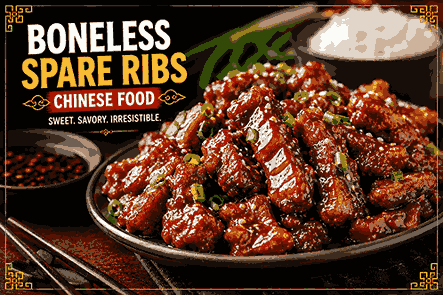
Many people wonder why restaurant-style boneless spare ribs Chinese food looks so vibrantly red. The answer is rarely natural. Chefs use red food coloring to create a visual distinction. In traditional Cantonese cooking, fermented red bean curd (Nam Yu) provided a natural reddish hue.
However, in high-volume American takeout spots, red dye (often Red #40) is added to the marinade. It creates a psychological expectation of sweetness. The color signals that the meat has been heavily marinated, even if the flavor is simple. If you cook at home, you can skip the dye entirely; the flavor remains identical, though the nostalgia factor might dip.
The Best Cut of Meat: Why Pork Butt Wins
If you want authentic results, stop looking at the rib section. Boneless spare ribs Chinese food is almost always made from pork butt (Boston Butt). This cut comes from the shoulder, not the rib cage.
Pork butt contains intramuscular fat that renders down during slow roasting. This keeps the meat juicy. If you use pork loin or tenderloin, the meat will dry out under the high heat required to caramelize the sugar. Ask your butcher for a fatty piece of pork shoulder to replicate that melt-in-your-mouth feel.
How to Slice Meat for Perfect Texture
Texture is everything in this dish. You cannot simply chop the meat into cubes. You must slice it into strips that mimic the shape of rib meat off the bone.
- Thickness: Aim for strips about 1 to 1.5 inches thick.
- Length: Keep them between 3 to 4 inches long.
- Grain: Slice against the grain to shorten the muscle fibers.
This shape increases the surface area. More surface area means more contact with the marinade and more caramelization during roasting.
The Essential Marinade: Balancing Sweet and Savory
The flavor profile of boneless spare ribs Chinese food relies on a delicate balance. The marinade must penetrate the meat while acting as a glaze later. The core components are simple:
- Sugar: Brown sugar or honey. This creates the sticky crust.
- Salt: Soy sauce (light and dark).
- Acid: Chinese rice wine (Shaoxing) or vinegar to tenderize.
- Aromatics: Garlic powder, five-spice powder, and white pepper.
You must marinate for at least 8 hours. Overnight is better. The salt denatures the proteins, allowing the meat to retain moisture while roasting.
A Step-by-Step Recipe for Restaurant Quality Ribs
Creating this at home requires attention to heat management. Follow these steps for the best results.
- Prepare the Meat: Trim excess hard fat but leave the soft marbling.
- Mix the Marinade: Combine hoisin sauce, soy sauce, honey, Chinese five-spice, and red food coloring (optional).
- Marinate: Coat the pork strips thoroughly. Seal and refrigerate for 12 hours.
- The Pre-Roast: Place the strips on a wire rack over a baking sheet. Let them come to room temperature.
- The Cook: Roast at 325°F (160°C) for 30 minutes. Then, baste with leftover marinade and increase heat to 425°F (220°C) for 15 minutes to char the edges.
- Rest: Let the meat rest for 10 minutes before slicing into bite-sized pieces. This keeps the juices inside.
Char Siu vs. Boneless Spare Ribs: What is the Difference?
Confusion often arises between these two dishes. Char Siu is the Cantonese term for BBQ pork. Boneless spare ribs Chinese food is essentially a variant of Char Siu.
However, there is a distinction in cut and sauce. Char Siu often uses leaner cuts like pork loin and features a distinct red exterior with a glossy sheen. Boneless spare ribs are thicker, fattier, and usually served with a heavier, stickier, and darker sauce. They are soulmates but not identical twins.
Serving Suggestions and Side Dishes
While you can eat these ribs straight from the container, they pair well with specific sides. The richness of the pork needs acid or starch to balance it.
- Steamed White Rice: A must for soaking up the extra glaze.
- Stir-fried Vegetables: Bok choy or broccoli cuts through the fat.
- Fried Rice: For the ultimate indulgence.
- Hot Mustard: The sharp heat of Chinese hot mustard contrasts the sweet meat beautifully.
Top 5 Mistakes to Avoid When Cooking
Many attempts fail due to simple errors. Avoid these pitfalls to ensure your meat is tender and not tough.
- Cooking too low and slow: Unlike American BBQ, this is not a “low and slow” brisket. You need high heat at the end to create the bark.
- Skipping the sugar: Sugar is not just for flavor; it is a tenderizer and a preservative.
- Using liquid smoke: Authentic Chinese flavor comes from five-spice and honey, not smoke.
- Cutting too thin: Thin strips turn into jerky. Keep them thick.
- Boiling the marinade: If you want to use leftover marinade as a dip, you must boil it vigorously for five minutes to kill bacteria.
Health and Nutrition: What to Know
Boneless spare ribs Chinese food is a treat. It is high in protein but also high in sugar and sodium. A typical serving contains significant calories due to the fat content and the sugar glaze.
If you are watching your intake, you can modify the recipe. Reduce the sugar by half or use a sugar substitute that can withstand heat, like monk fruit. However, note that the texture will change slightly. The red dye used in restaurants offers no flavor and can be safely omitted from a home-cooked version.
Frequently Asked Questions (FAQs)
Question: What cut of meat is used for boneless spare ribs Chinese food?
Answer: The industry standard is pork butt or Boston Butt. This comes from the shoulder and contains enough fat to prevent the meat from drying out during the caramelization process. Leaner cuts do not yield the same tender texture.
Question: Why are my homemade boneless spare ribs dry?
Answer: Dryness occurs when you use a lean cut or overcook the meat. Ensure you select pork shoulder with good marbling. Also, avoid baking them for too long at a low temperature without a final sear. The high heat at the end seals the surface, trapping interior moisture.
Question: Can I make boneless spare ribs in an air fryer?
Answer: Yes, you can. The air fryer is excellent for this dish. Set the air fryer to 375°F (190°C) and cook for 10-12 minutes, flipping halfway. The rapid air circulation creates a fantastic char on the sugar glaze quickly, mimicking a high-heat oven.
Question: Is the red color in Chinese spare ribs natural?
Answer: In most commercial restaurants, the red color is artificial food coloring (Red 40). Traditionally, fermented red bean curd was used. The color does not change the taste but does affect the visual expectation of the dish.
Question: How long should I marinate the pork for the best flavor?
Answer: You should marinate for a minimum of 4 hours, but 12 to 24 hours is optimal. The longer marination time allows the salt and enzymes in the sauce to break down the muscle fibers, resulting in a more tender and flavorful final product.
Question: What is the difference between spare ribs and boneless spare ribs?
Answer: The main difference is the bone and the location of the meat. Traditional spare ribs come from the belly/rib area of the pig and contain bones. Boneless spare ribs are typically strips of pork shoulder or loin that are cut to resemble the meat around a rib bone but have no bone at all.
Table: Key Ingredients and Their Roles
| Ingredient | Category | Role in the Dish | Substitute |
| Pork Butt | Protein | Provides fat, tenderness, and structure. | Pork Shoulder Steak |
| Hoisin Sauce | Flavor Base | Adds salt, umami, and thickness to the glaze. | Oyster Sauce + Sugar |
| Honey | Sweetener | Creates the sticky, caramelized exterior. | Brown Sugar or Maltose |
| Shaoxing Wine | Liquid | Removes “gaminess” from pork and adds complexity. | Dry Sherry or Mirin |
| Five-Spice | Aromatic | Provides the distinct “Chinese” licorice/warmth. | Star Anise + Cinnamon |
| Red Colorant | Visual | Triggers appetite and expectation of flavor. | Fermented Red Bean Curd |
Conclusion
Mastering this dish puts you in control of one of the most beloved takeout staples in the world. You no longer have to rely on delivery apps or settle for dry, stringy meat. Grab a good cut of pork shoulder, mix up that sticky marinade, and fire up your oven. Try this method tonight and taste the difference that proper technique makes; your kitchen will smell better than your favorite restaurant.