The Definitive Guide to Cooking a Perfect Broiled Steak
Introduction
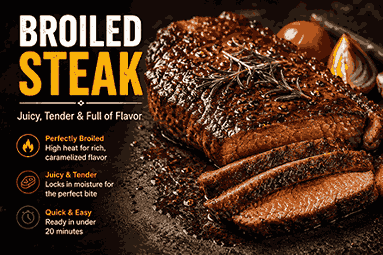
Are you tired of setting off the smoke alarm just to get a decent sear on your steak? You do not need an outdoor grill to achieve a steakhouse-quality crust. Your oven’s broiler is a hidden powerhouse that can deliver intense, direct heat in minutes. This guide provides a step-by-step method to cook a juicy, flavorful broiled steak with a perfect char, using simple tools and precise timing you can rely on every single time.
What is a Broiled Steak?
A broiled steak is cooked using intense, direct radiant heat from the top element of your oven. Unlike baking, which surrounds food with hot air, broiling sears the surface quickly. This method mimics the high heat of a grill, creating a caramelized crust while locking the natural juices inside the meat.
Why Broiling Beats Pan-Searing (And Your Smoke Alarm)
Pan-searing often requires high heat and oil, which frequently leads to a smoky kitchen. Broiling offers a cleaner alternative. The heat source sits above the food, allowing fat to drip away into the pan below rather than burning on your stovetop. You get the same Maillard reaction—that rich, savory crust—without the lingering haze in your living room.
The Best Cuts for Broiling
Not all steaks are created equal under the broiler. You need cuts that are tender and cook quickly, as prolonged exposure to high heat will dry out tougher cuts.
- Ribeye: High fat content makes it forgiving and exceptionally flavorful.
- New York Strip: Offers a perfect balance of firm texture and marbling.
- Filet Mignon: Very tender, though you must monitor the temperature closely to avoid overcooking.
- T-Bone/Porterhouse: Large cuts that require careful positioning away from the heating element.
Essential Equipment Checklist
To achieve the perfect broiled steak, gather these tools before you start:
- Heavy-duty skillet (Cast iron is preferred for heat retention).
- Instant-read meat thermometer (non-negotiable for accuracy).
- Tongs (for flipping without piercing the meat).
- Aluminum foil (for resting and easy cleanup).
- Timer.
How to Cook Broiled Steak: Step-by-Step Method
Follow these steps precisely to ensure a perfect result from edge to center.
- Prep the Steak: Remove the steak from the refrigerator 30 minutes before cooking. Pat it completely dry with paper towels. Moisture is the enemy of a good crust.
- Season Generously: Brush the steak lightly with high-smoke-point oil (avocado or canola oil). Season liberally with kosher salt and coarse ground black pepper. Do not be shy; large cuts require aggressive seasoning.
- Position the Oven Rack: Move your oven rack to the highest position, typically 3 to 4 inches from the broiler element.
- Preheat the Pan: Place your dry cast iron skillet on the rack and turn the broiler on high. Let the pan heat for 10 to 15 minutes. A screaming-hot pan is vital for searing the bottom immediately.
- Broil the First Side: Carefully place the steak in the hot skillet. The sizzle should be immediate and loud. Broil for 4 to 6 minutes depending on thickness.
- Flip and Finish: Use tongs to flip the steak. Broil for another 3 to 5 minutes, or until the internal temperature reaches 5°F below your target doneness.
- Rest Before Serving: Transfer the steak to a cutting board, top with a pat of butter, and tent loosely with foil. Rest for 5 to 10 minutes to allow the fibers to relax and retain their juices.
Broiled Steak Temperature Chart (Doneness Guide)
Use an instant-read thermometer to guarantee accuracy. Remove the steak from the oven when it is 5°F below these final temperatures, as residual heat continues to cook the meat during resting.
| Doneness Level | Internal Temperature | Color & Texture |
| Rare | 125°F (52°C) | Cool red center, very soft |
| Medium Rare | 135°F (57°C) | Warm red center, tender |
| Medium | 145°F (63°C) | Pink center, firm |
| Medium Well | 150°F (66°C) | Slightly pink center, firm |
| Well Done | 160°F (71°C) | Brown throughout, tough |
Pro Tips for a Crusty Exterior and Juicy Interior
- Dry is Key: Pat the surface completely dry before oiling. Surface moisture creates steam, which prevents browning.
- Flip with Tongs: A fork punctures the meat, allowing precious juices to escape into the pan.
- Butter Basting: During the final minute of broiling, add a tablespoon of butter and fresh herbs (thyme or rosemary) to the pan. Spoon the melted butter over the top for a rich finish.
Common Broiled Steak Mistakes to Avoid
Steering clear of these errors will elevate your cooking instantly:
- Skipping the Preheating: A cold pan will not sear the underside, resulting in a gray, boiled look.
- Cooking Straight from the Fridge: A cold center requires more time in the oven, leading to an overcooked “gray band” surrounding the center.
- Cutting Too Early: Slicing into the steak immediately after cooking releases the juices onto the board, leaving the meat dry.
The Maillard Reaction: The Science of the Crust
The delicious crust on a broiled steak is the result of the Maillard reaction. This chemical process occurs when amino acids and sugars react under intense heat (above 300°F). It creates hundreds of flavor compounds that give the steak its savory, complex, and slightly nutty taste. The intense radiant heat from the broiler is perfect for triggering this reaction quickly without drying out the interior.
How to Serve Your Broiled Steak
A perfect steak deserves a supporting cast that complements its richness.
- Classic: Slice against the grain and serve with roasted asparagus or mashed potatoes.
- Steakhouse Style: Top with a compound butter (blue cheese or garlic herb).
- Sauces: A light chimichurri or a creamy peppercorn sauce adds moisture and acidity.
Frequently Asked Questions
Question 1: Can you cook a frozen steak under the broiler?
While possible, it is not recommended. Cooking a frozen steak in a broiler creates a massive temperature differential. The outside burns before the inside thaws. For the best texture and even cooking, always thaw your broiled steak completely in the refrigerator overnight and bring it to room temperature before cooking.
Question 2: Why is my broiled steak tough and chewy?
Toughness usually comes from overcooking or cutting incorrectly. If you cook a steak to “well done,” the muscle fibers contract and squeeze out moisture. Additionally, if you slice with the grain, the long fibers remain intact, making chewing difficult.To shorten the fibers, always cut against the grain.
Question 3: How long should I preheat the broiler pan?
You should preheat your cast iron pan under the broiler for a minimum of 10 to 15 minutes. This ensures the pan acts as a secondary heat source. When you place the steak in the pan, the bottom begins searing instantly while the top is seared by the broiler element.
Question 4: Do I need to use oil if the steak is marbled?
Yes, but only a light coating. Oil helps conduct heat evenly across the surface of the meat, filling in microscopic gaps where the meat doesn’t touch the pan. Use a high-smoke-point oil like avocado oil to prevent the oil itself from burning and turning bitter.
Question 5: Should I leave the oven door open when broiling?
This depends on your oven model. Older ovens required the door to be cracked open to prevent the broiler from cycling off due to overheating. Many modern ovens are designed to be broiled with the door closed. Check your manufacturer’s manual. If you see the element turning off frequently, crack the door open an inch.
Question 6: What is the best seasoning for a broiled steak?
Simplicity wins. Large flake kosher salt is non-negotiable; it draws out moisture and reabsorbs, flavoring the meat deeply. Fresh cracked black pepper adds heat. If you want to add garlic powder or paprika, do so lightly, as these can burn under the intense heat of the broiler and become bitter.
Elevate Your Steak Tonight
You now have the blueprint to create a steakhouse-quality dinner in your own kitchen. The broiler offers speed and intensity that few other methods can match. Pull out your cast iron skillet, turn that dial to high, and taste the difference that proper technique makes. Try this method tonight and share your perfectly charred results with us.