Food With Nature: How to Eat Closer to the Earth Every Day
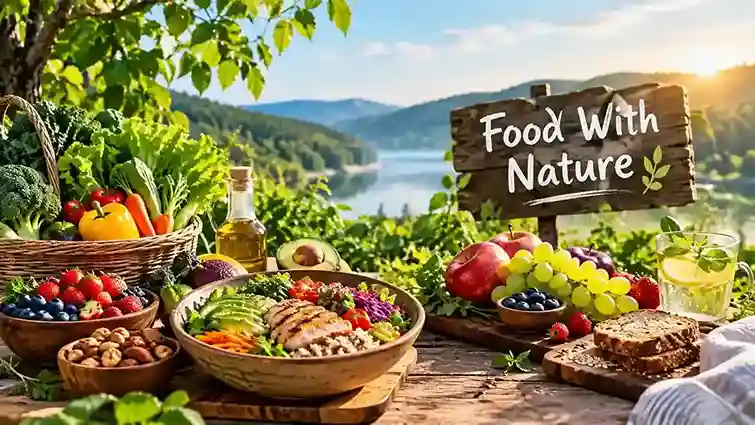
Most people eat three times a day without ever asking where the meal actually came from. Packaged snacks and drive-through dinners have quietly replaced real ingredients, and energy, digestion, and mood pay the price. The good news is simple: practicing food with nature restores that lost link between your plate and the planet, and this guide shows exactly how to start today.
What Does “Food With Nature” Actually Mean?
Food with nature is the practice of choosing, growing, and eating food that stays close to its original, living state. It favors vegetables pulled from soil over vegetables poured from a bag, and it favors fruit picked at the right season over fruit shipped from three continents away.
This is not a diet plan. It is a way of relating to food that respects natural cycles, local ecosystems, and the human body’s own biology.
- Fresh, minimally processed ingredients
- Seasonal and regional produce
- Farming methods that protect soil and water
- Meals that reflect the rhythm of the land, not a factory schedule
Why Your Body Responds to Eating This Way
Human digestion, hormones, and metabolism developed over thousands of years around whole, natural ingredients. Ultra-processed products are a recent invention, and the body still struggles to handle their added sugar, refined oil, and artificial additive load.
When you shift toward food with nature, digestion steadies, blood sugar swings shrink, and inflammation markers often drop. The body simply runs better on the ingredients it evolved to expect.
The Science Behind Nature and Healthier Eating
Researchers at INSEAD and Southern Methodist University ran five separate experiments and found that people who spent time in natural surroundings consistently chose healthier foods than people in urban settings, even when the two groups had identical options in front of them (Communications Psychology, 2024).
The pattern held across three countries and multiple food categories, from snacks to beverages. Simply viewing nature scenes, not just walking through a park, was enough to shift choices toward fresher, less processed options.
This tells us something important: connecting with nature is not only about what is on the plate. Proximity to the outdoors, even a short walk, nudges the brain toward better decisions at the table.
Official Guidance Now Backs Food With Nature
Government nutrition policy has caught up with this idea. The 2025-2030 Dietary Guidelines for Americans, released jointly by the USDA and HHS, place whole, nutrient-dense foods back at the center of national dietary advice and call for a sharp reduction in highly processed products (USDA).
The World Health Organization echoes the same message on a global scale. Its healthy diet guidance recommends at least 400 grams of fruit and vegetables daily, alongside legumes, nuts, and whole grains, while limiting added sugar, salt, and unhealthy fat (WHO, Healthy Diet).
Both organizations describe the same core idea from different angles: real ingredients over factory formulas.
Food With Nature vs. Ultra-Processed Eating
| Factor | Food With Nature | Ultra-Processed Eating |
| Nutrient density | High: vitamins, minerals, fiber intact | Low: nutrients stripped during processing |
| Ingredient list | Short, recognizable ingredients | Long, includes additives and preservatives |
| Blood sugar impact | Gradual, steady rise | Rapid spikes and crashes |
| Environmental footprint | Lower, especially with local sourcing | Higher, tied to packaging and long supply chains |
| Gut health support | Feeds beneficial bacteria via fiber | Often disrupts gut microbiome balance |
| Cost over time | Can be lower with seasonal buying | Often higher per nutrient delivered |
Core Principles of Eating With Nature’s Rhythm
A few simple principles guide anyone who wants to build more food with nature into daily life without overhauling their entire kitchen overnight.
- Choose ingredients that need little more than washing or cooking before eating.
- Buy produce that is in season in your region.
- Favor farms and markets that protect soil health over factories that strip it.
- Instead than putting meals together from packages, cook them from the components.
- Treat animal products, when eaten, as coming from a real farm rather than a label.
Seasonal Eating: Aligning Your Plate With Nature’s Calendar
Seasonal eating is one of the clearest expressions of this philosophy in daily life. Produce picked at peak season carries more flavor and more nutrients than produce forced to ripen early or travel long distances.
Spring favors leafy greens and early berries. Summer brings tomatoes, stone fruit, and corn. Autumn delivers squash, apples, and root vegetables. Winter leans on stored grains, citrus, and hardy greens.
Following this calendar naturally varies your diet across the year, which supports a wider range of nutrients than eating the same foods every month.
Foraging, Farming, and Local Food: Practical Entry Points
You do not need a farm to practice food with nature. Small, repeatable actions build the same connection over time.
- Visit a farmers market once a week instead of relying only on a supermarket.
- Grow one or two herbs or vegetables on a windowsill or balcony.
- Learn to identify a handful of safe, local edible plants with a verified guide or expert.
- Join or start a community garden plot.
- Ask where your grocery store sources its produce and choose the shorter supply chain when possible.
A master’s thesis from Wageningen University found that foragers, small-scale organic growers, and people who cook with foraged ingredients report a noticeably stronger sense of connectedness to nature than people who buy every item pre-packaged.
How Eating This Way Promotes Gut Health
Whole, fiber-rich ingredients feed the trillions of bacteria living in the gut. This is one of the most measurable benefits of food with nature, and it shows up quickly once ultra-processed items leave the plate.
Fiber from vegetables, legumes, and whole grains ferments in the colon and produces short-chain fatty acids that reduce inflammation and support the gut lining. Processed foods, by contrast, often lack this fiber and instead introduce emulsifiers linked to gut irritation in early research.
A steadier gut typically means steadier digestion, better nutrient absorption, and fewer post-meal energy crashes.
The Mental Health Case for Nature-Based Eating
This approach reaches beyond the gut. Time spent outdoors before or during meal preparation has been linked to lower cortisol, the body’s primary stress hormone, and to improved mood.
Preparing a meal from garden or market ingredients also adds a sense of accomplishment that a microwaved package cannot replicate. That small ritual of washing, chopping, and cooking real food gives the mind a short, grounding break from screens and deadlines.
Sustainable Food With Nature: Protecting the Planet While You Eat
Every food choice carries an environmental cost, and eating this way generally carries a lighter one. Local, seasonal produce travels shorter distances, and farms that protect soil health also protect the water and biodiversity around them.
Regenerative and organic farming methods reduce reliance on synthetic pesticides and rebuild soil carbon over time. Choosing these ingredients at the grocery store or market therefore supports farmers who work with natural systems instead of against them.
Simple Daily Habits to Bring Nature Into Every Meal
- Start the day with fruit or vegetables in their whole form.
- Cook one meal a day entirely from scratch.
- Replace one packaged snack per day with a piece of fresh produce.
- Eat at least one meal outdoors or near a window each week.
- Keep a short list of in-season produce on the fridge as a shopping guide.
Common Mistakes People Make When Trying to Eat With Nature
- Treating it as an all-or-nothing switch instead of a gradual shift.
- Assuming “natural” on a label guarantees minimal processing, when the term is not tightly regulated.
- Ignoring cost planning and buying only expensive specialty items.
- Skipping meal preparation and falling back on convenience food during busy weeks.
- Overlooking frozen or canned produce, which can still fit a food with nature approach when picked at peak ripeness.
Frequently Asked Questions
What does “food with nature” mean in simple terms?
It means choosing food close to its natural, whole state and eating in step with local seasons rather than relying mainly on processed, packaged products.
Is food with nature the same as eating organic?
Not exactly. Organic refers to farming methods, while this approach is a broader mindset that includes seasonal eating, local sourcing, and minimal processing.
Can this way of eating fit a tight budget?
Yes. Seasonal produce, dried legumes, and whole grains bought in bulk are often cheaper per nutrient than packaged convenience foods.
Does spending time outdoors really change what I eat?
Research from INSEAD and SMU found that exposure to nature, even brief exposure, shifted people toward healthier food choices across several large experiments.
Do I need a garden to practice food with nature?
No. A weekly farmers market visit, one windowsill herb pot, or simply cooking from scratch already moves you toward this approach.
How quickly will I notice benefits from eating this way?
Many people notice steadier energy and digestion within one to two weeks, though full benefits build gradually over months.
Start Practicing Food With Nature Today
Food with nature is not a rigid rule book. It is a daily return to ingredients your body already knows how to use well. Pick one habit from this guide — a farmers market visit, or a single scratch-cooked meal — and build from there. Your gut, your mood, and the land you depend on will all notice the difference.