Muslim Food Delivery: Your Complete Guide to Halal Meals at Your Door
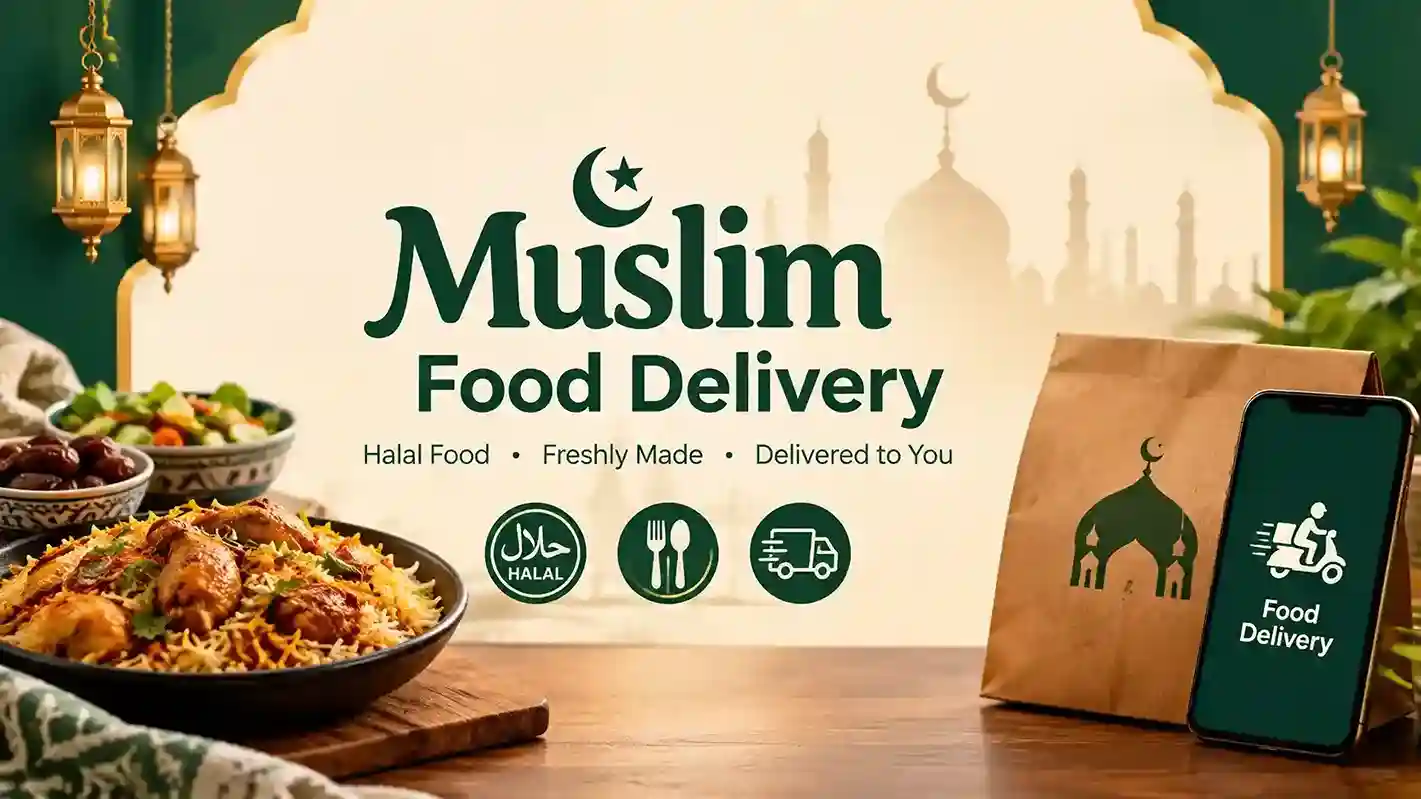
You’re hungry. You want food fast. But you also need it halal, and that search can feel like a maze of apps, mixed reviews, and unclear labels. This guide fixes that. Below, you’ll find verified halal delivery options, app comparisons, and simple checks that protect your meal every single time.
What Muslim Food Delivery Really Means
Muslim food delivery refers to ordering meals prepared according to Islamic dietary law, then delivered directly to your home, office, or event. It covers everything from a single halal shawarma wrap to a full catering order for a wedding.
The term extends beyond meat sourcing. It includes preparation methods, ingredient sourcing, and the absence of alcohol or pork derivatives in any stage of cooking. A genuine Muslim food delivery order respects the entire chain, not just the final dish.
- Restaurant-based halal delivery
- Muslim-owned home kitchens and cloud kitchens
- Grocery and meat delivery for home cooking
- Event and catering delivery for large gatherings
Why Halal Certification Matters
Certification removes guesswork. A certified kitchen has been inspected by a recognized halal authority, confirming that sourcing, slaughter, and handling meet Islamic requirements.
Look for certification marks from established bodies such as the Islamic Food and Nutrition Council of America (IFANCA) or your local halal board. These organizations publish directories that list approved restaurants, which you can cross-check before placing an order.
Without certification, a restaurant may still serve honest food, but you’re relying on trust alone. Certification adds a documented layer of accountability that protects your choice.
Quick check: Search the restaurant name plus “halal certified” alongside the certifying body’s name. If nothing appears, call the restaurant directly and ask which authority verifies their supply chain.
Top Apps for Muslim Food Delivery
Several mainstream delivery apps now include halal filters, while dedicated Muslim food delivery platforms focus exclusively on verified kitchens.
| App/Platform | Halal Filter | Best For |
| Zabihah-linked directories | Manual search, listings only | Finding certified restaurants |
| Mainstream delivery apps (with halal tag) | Yes, filter available | Speed and wide selection |
| Muslim-owned delivery startups | Built-in, kitchen-verified | Guaranteed halal sourcing |
| Local mosque or community groups | Word-of-mouth verified | Hyper-local trust |
When using a mainstream app’s halal filter, treat it as a starting point, not a guarantee. Many platforms rely on restaurant self-reporting rather than independent audits, so pairing the filter with your own quick verification call gives you real peace of mind.
How to Spot a Genuine Halal Restaurant
Certain signals separate a trustworthy Muslim food delivery restaurant from one that simply uses the word loosely.
Green flags
- Visible certification logo on menu or storefront photos
- Staff can name their halal supplier without hesitation
- Menu clearly separates halal items if the kitchen also serves non-halal food
- Positive, consistent reviews mentioning halal accuracy
Red flags
- “Halal-friendly” wording instead of a direct halal claim
- No certification info anywhere online
- Shared fryers or grills with non-halal meat, unmentioned
- Vague or defensive answers when asked about sourcing
A short phone call before ordering resolves most doubts in under two minutes.
Muslim Food Delivery During Ramadan
Ramadan reshapes delivery demand overnight. Suhoor orders spike before dawn, and iftar orders surge in the final hour before sunset. Planning ahead prevents disappointment.
Many Muslim food delivery restaurants extend hours specifically for this month, offering pre-set iftar boxes that bundle dates, soup, mains, and dessert. Booking these in advance, sometimes days ahead, secures your spot during the busiest delivery windows of the year.
- Order iftar meals at least 24 hours in advance during peak Ramadan weeks
- Confirm suhoor delivery cutoff times, since kitchens close earlier before dawn
- Ask about family-size bundles to reduce per-meal delivery fees
Regional Availability Across Cities
Muslim food delivery density varies sharply by city. Areas with larger Muslim populations naturally support more certified kitchens and dedicated delivery services.
Major metro areas with established Muslim communities typically offer the widest halal selection, often including multiple cuisines such as Middle Eastern, South Asian, Southeast Asian, and West African halal options. Smaller towns may have fewer choices, making grocery-based halal meat delivery a practical backup.
If your city lacks strong options, community Facebook groups and mosque bulletin boards often list home-based halal cooks who deliver locally, filling gaps that big apps miss.
Comparing Prices and Delivery Fees
Delivery costs for halal meals mirror general food delivery pricing, though specialty or catering-level halal orders can carry a premium due to sourcing costs.
- Compare per-item pricing across at least two platforms before ordering
- Watch for minimum order thresholds that inflate your final total
- Group orders with family or coworkers to split delivery fees
- Check for first-order discounts on newer Muslim-owned delivery apps
Subscription-based grocery delivery for halal meat often works out cheaper per meal than repeated restaurant orders, especially for larger households.
Muslim-Owned Delivery Businesses
Supporting Muslim-owned delivery businesses strengthens the entire ecosystem, from farm to fork. These businesses often build their reputation entirely on halal integrity, since their brand depends on it.
Many started as small home kitchens before scaling into full delivery operations. Choosing them means your money circulates back into community-run food networks, and you typically get closer communication about sourcing than with large anonymous chains.
- Search local directories for Muslim-owned tags
- Read founder stories on restaurant websites or social pages
- Prioritize businesses that publish their supplier names openly
Safety, Hygiene, and Cross-Contamination
Halal status isn’t only about the animal; it’s also about the kitchen environment. Cross-contamination with non-halal items or alcohol-based sauces can compromise an otherwise correctly sourced meal.
Reputable kitchens use separate prep stations, dedicated utensils, and clearly labeled storage for halal ingredients. When ordering from a mixed-menu restaurant, ask directly whether halal and non-halal items share cooking surfaces.
- Confirm separate fryers if fried items are part of your order
- Ask whether marinades or sauces contain wine, vanilla extract with alcohol, or similar hidden ingredients
- Choose restaurants that disclose this information without being asked, since it signals genuine practice
Building Your Own Halal Delivery Checklist
A simple, repeatable checklist turns Muslim food delivery from guesswork into routine confidence.
| Step | Action | Why It Matters |
| 1 | Verify certification or ask directly | Confirms sourcing legitimacy |
| 2 | Check for shared cooking equipment | Prevents cross-contamination |
| 3 | Read recent reviews for halal mentions | Reveals real customer experience |
| 4 | Confirm delivery time during peak hours | Avoids late or cold meals |
| 5 | Save trusted restaurants to a favorites list | Speeds up future ordering |
Once built, this checklist takes under a minute per order and removes repeated research every time hunger strikes.
The Future of Halal Food Tech
Dedicated Muslim food delivery platforms are expanding beyond restaurant orders into halal grocery delivery, subscription meal kits, and verified catering marketplaces. Blockchain-based supply chain tracking is also emerging as a tool to verify halal sourcing from slaughterhouse to doorstep.
As demand grows, expect more mainstream platforms to add dedicated halal sections rather than treating it as a minor filter, driven directly by customer requests and community pressure.
Frequently Asked Questions
Is Muslim food delivery the same as halal food delivery?
Yes, the terms are used interchangeably. Both describe meals prepared and sourced according to Islamic dietary law, then delivered to the customer.
How can I confirm a delivery restaurant is truly halal?
Check for certification logos from recognized halal authorities, read recent customer reviews, and call the restaurant directly to ask about their meat supplier.
Do mainstream delivery apps guarantee halal accuracy?
Not always. Many apps rely on restaurant self-reporting for their halal filter, so pairing the filter with your own quick verification call is the safer approach.
What should I order during Ramadan for faster delivery?
Pre-set iftar bundles booked at least a day in advance move faster than last-minute individual orders, especially during the final hour before sunset.
Are Muslim-owned delivery businesses more reliable for halal food?
Generally, yes. Their reputation depends entirely on halal integrity, and many disclose suppliers openly, giving customers more transparency than large mixed-menu chains.
Can I find halal meat delivery instead of restaurant meals?
Yes. Many halal butchers now offer direct-to-door meat delivery, which works well for home cooking and often costs less per meal than repeated restaurant orders.
Final Word: Order With Confidence
Finding trustworthy Muslim food delivery no longer has to feel uncertain. With a short verification habit, a saved list of certified restaurants, and the right platform choice, every order becomes simple and dependable. Save this guide, build your checklist today, and share it with someone in your community who’s still searching for their next reliable halal meal.