Danish Food: The Complete Guide to Traditional Danish Dishes
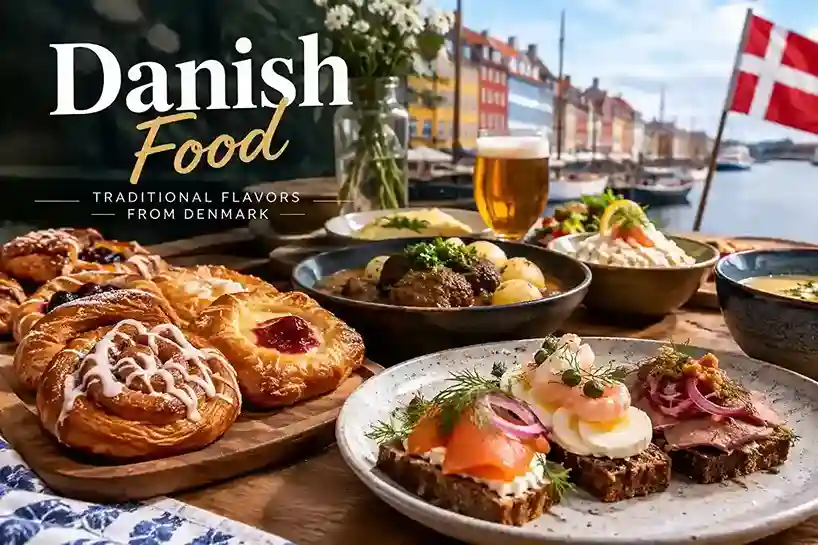
You want to understand Danish food, but most guides repeat the same five dishes and stop there. That leaves you unprepared for a Copenhagen menu or a real Danish kitchen. This guide fixes that. You’ll walk away knowing what Danish food actually means, how it’s eaten, and why Denmark’s kitchen quietly shapes modern Nordic cooking.
What Is Danish Food? A Quick Introduction
Danish food is built on rye bread, pork, fish, dairy, and root vegetables — ingredients that once had to survive a long, cold winter. Preservation techniques like pickling, smoking, and salting still define the cuisine today.
Danish food splits into two clear categories:
- Home cooking (hjemmelavet mad) — simple, seasonal, family-style meals
- New Nordic cuisine — the refined, restaurant-driven movement that put Copenhagen on the global food map
Both styles share the same backbone: local ingredients, minimal waste, and respect for the season.
A Brief History of Danish Food and Its Viking Roots
The story of Danish food starts centuries before restaurants existed. Vikings preserved fish and meat on flatbread to survive winter voyages, a habit that eventually evolved into rye bread with toppings.
Farming shaped the next chapter. Pork, potatoes, and dairy became staples because Denmark’s flat, fertile land suited livestock and root crops better than large-scale grain farming. That agricultural history still shows up on Danish plates.
By the 19th century, open-faced sandwiches had become a lunchtime staple across the country, laying the foundation for the dish most people now associate with Danish food.
Smørrebrød: The Open-Faced Sandwich That Defines Danish Food
Smørrebrød is the single most recognizable example of Danish food outside Denmark. It’s a slice of dense rye bread topped — never covered — with combinations like pickled herring, roast beef, egg, or remoulade.
A few rules separate real smørrebrød from an ordinary sandwich:
- Always open-faced, never closed
- Rye bread only, never white bread
- Toppings are layered by hand, not stacked randomly
- Eaten with a knife and fork, not by hand
Smørrebrød restaurants in Copenhagen still build entire menus around dozens of topping combinations, treating each one as its own small dish.
Stegt Flæsk: Denmark’s Official National Dish
When Danes voted for a national dish, stegt flæsk med persillesovs won by a wide margin. It’s crispy fried pork belly served with parsley sauce and boiled potatoes.
The appeal is simple. It’s cheap, filling, and built from ingredients every Danish household already had access to. You’ll find it on menus across the country, often at prices lower than tourist-facing dishes.
Frikadeller: The Danish Meatball Everyone Loves
Frikadeller are pan-fried meatballs made from a mix of pork and veal, bound with breadcrumbs and egg. They’re lighter and flatter than Swedish meatballs, and nearly every Danish family has its own recipe.
Frikadeller usually appear with:
- Boiled potatoes and gravy
- Pickled red cabbage
- Cold potato salad in summer
This dish shows up so often in home cooking that many Danes consider it the true everyday face of Danish food, even more than smørrebrød.
Danish Pastries (Wienerbrød): Sweet Treats Beyond Borders
Here’s a detail that surprises most visitors: Danish pastries aren’t originally Danish. Austrian bakers introduced the technique to Denmark in the 1840s, and locals call it wienerbrød — literally “Vienna bread.”
Danes adapted the layered, buttery dough into their own versions, filled with remonce, custard, or fruit. The pastry stuck, and today it’s one of the most exported symbols of Danish food anywhere in the world.
Traditional Danish Christmas Food
Christmas turns Danish food into a full seasonal event. Families gather around dishes that only appear once a year, and the meal often stretches across several courses.
Common Christmas staples include:
- Flæskesteg – roast pork with crackling
- Brunkål – slow-cooked caramelized cabbage with bacon
- Æbleskiver – round, fluffy pancake balls dusted with sugar
- Risalamande – rice pudding dessert with a hidden almond and a prize for whoever finds it
These dishes rarely appear outside December, which makes Danish Christmas food a distinct sub-category worth knowing before you travel during the holidays.
Everyday Danish Food: What Locals Actually Eat
Tourist menus can distort what real Danish food looks like on a Tuesday. Most Danes eat simply, and dinner is a shared family event more often than in many other countries.
A typical day looks like this:
| Meal | Typical Dish |
| Breakfast | Rye bread or oats with dairy, often with jam or cheese |
| Lunch | Smørrebrød with cold cuts, herring, or liver pâté |
| Dinner | Hot meal with potatoes — frikadeller, stegt flæsk, or fish |
| Snack | Wienerbrød or fruit |
Home-cooked dinners remain the norm, with families eating together most nights of the week.
New Nordic Cuisine and Modern Danish Food
Danish food changed direction in the mid-2000s when a group of chefs signed the New Nordic Food Manifesto, committing to local, seasonal, and foraged ingredients over imported luxury items. Copenhagen restaurants like Noma turned that philosophy into a global movement.
This shift didn’t replace traditional Danish food — it reinterpreted it. Foraged herbs, fermentation, and locally caught seafood now appear alongside rye bread and pickled vegetables on the same tasting menus.
Regional Danish Food Across Denmark
Denmark is small, but regional differences still shape what’s on the table.
- Copenhagen — highest concentration of New Nordic and Michelin-recognized restaurants
- Bornholm — known for smoked herring and small-batch seafood
- Jutland — stronger pork and dairy farming tradition, heartier home cooking
- Funen — apple orchards feed local desserts and cider
Traveling between regions gives a fuller picture of Danish food than any single city can offer.
Health Benefits and Nutrition in Danish Food
Traditional Danish food leans on whole grains, fish, and vegetables, which gives it real nutritional strengths when eaten in balance.
- Rye bread delivers fiber and keeps blood sugar steadier than white bread
- Herring and other cold-water fish are rich in omega-3 fatty acids
- Root vegetables and cabbage supply fiber and vitamin C
- Fermented and pickled foods support gut health
Portion size and frequency of fried pork dishes still matter, so treat Danish food the way Danes do — hearty meals balanced with simple, plant-based sides.
Where to Try Authentic Danish Food (Restaurants and Markets)
Copenhagen offers the widest range, but authentic Danish food isn’t limited to fine dining.
- Torvehallerne food market — stalls selling smørrebrød, cheese, and baked goods
- Neighborhood smørrebrød shops — often cheaper and more traditional than tourist spots
- Christmas markets – seasonal food from late November through December
- Local bakeries — the most reliable place to try genuine wienerbrød
Ask locals for their neighborhood favorite rather than relying only on top-ten lists — the best Danish food is often found a few streets away from the main square.
How to Cook Danish Food at Home
You don’t need to visit Denmark to start cooking Danish food. A few pantry basics go a long way.
- Keep dense rye bread on hand as your base
- Stock pickled herring, remoulade, and liver pâté for quick smørrebrød
- Learn frikadeller first — it’s the most forgiving traditional recipe
- Add dill, parsley, and vinegar to season the Danish way
Start with frikadeller or smørrebrød before attempting Christmas dishes, since both use ingredients that are easy to find outside Denmark.
Danish Food at a Glance
| Dish | Category | Best Time to Eat |
| Smørrebrød | Lunch | Year-round |
| Stegt flæsk | Main course | Year-round |
| Frikadeller | Main course | Year-round |
| Wienerbrød | Pastry | Year-round |
| Flæskesteg | Main course | Christmas |
| Æbleskiver | Sweet snack | December |
| Risalamande | Dessert | Christmas Eve |
| Rødgrød med fløde | Dessert | Summer |
Frequently Asked Questions About Danish Food
What is the most popular Danish food?
Smørrebrød is the most internationally recognized Danish food, though stegt flæsk holds the official title of national dish inside Denmark.
Is Danish food healthy?
Yes, in its traditional form. Rye bread, fish, and vegetables give Danish food strong nutritional value, though fried pork dishes should be eaten in moderation.
What do Danes eat for breakfast?
A typical Danish breakfast includes rye bread or oats with dairy products, sometimes paired with jam, cheese, or fruit.
Why are Danish pastries not actually Danish?
Austrian bakers introduced the technique to Denmark in the 1840s. Danes call them wienerbrød, or “Vienna bread,” and later adapted the recipe into their own local versions.
What is Denmark’s national dish?
Stegt flæsk med persillesovs — crispy fried pork belly with parsley sauce and potatoes — holds the official title, chosen by public vote.
What food is Denmark most famous for?
Denmark is best known for smørrebrød, wienerbrød pastries, and its modern New Nordic cuisine, which reshaped fine dining across Scandinavia.
Ready to Taste Danish Food for Yourself?
Danish food rewards curiosity. Start with a plate of frikadeller at home, book a table at a Copenhagen smørrebrød shop, or track down real wienerbrød at a neighborhood bakery. Whichever direction you choose, you’re one bite closer to understanding why this small country’s kitchen carries so much weight on the world stage. Try one recipe this week and see where it takes you.