Asian Food: The Ultimate Guide to Regional Flavors and Iconic Dishes
Introduction
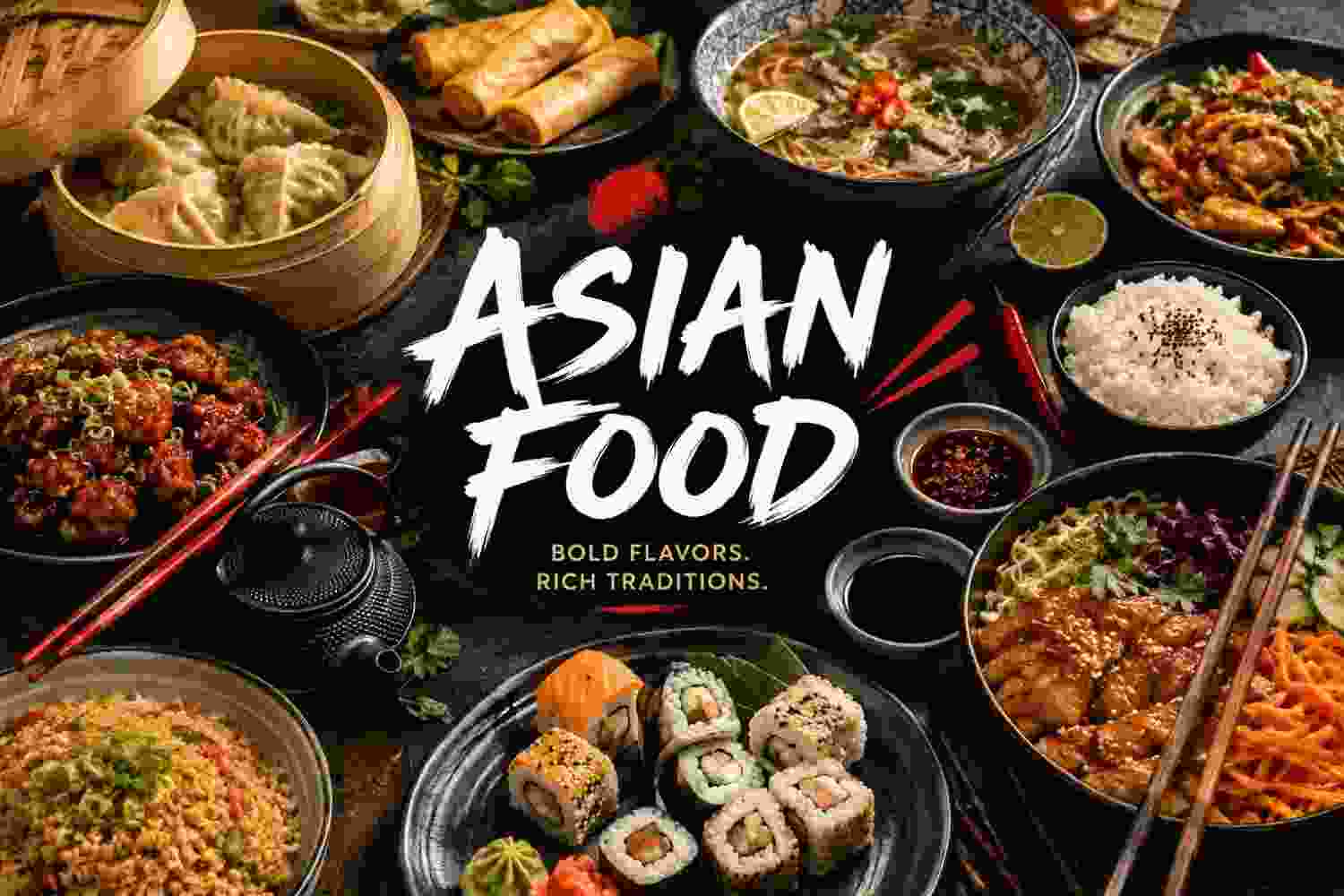
You cannot boil Asian food down to a single flavor. It is a tapestry of textures, temperatures, and aromas spanning thousands of miles. From the fiery street stalls of Bangkok to the precise sushi counters of Tokyo, every region tells a story through its ingredients. This guide cuts through the noise, mapping the distinct culinary identities that make this cuisine the most diverse on the planet.
The Foundation: What Defines Asian Food?
Asian food is not a monolith; it is a collection of cuisines united by a philosophy of balance. Chefs across the continent strive for harmony between sweet, sour, salty, bitter, and umami. Unlike Western cooking, which often centers on protein portions, Asian meals typically prioritize rice or noodles as the core component, with meats and vegetables serving as accompaniments.
The concept of “fan” (rice) and “cai” (dishes) in Chinese culture perfectly illustrates this. It shows that a meal must have a balanced textural contrast. This culinary approach values freshness and seasonality above all else, creating eating experiences that feel both grounded and vibrant.
The Bold Flavors of East Asia
East Asia focuses on purity and technique. Japanese cuisine (Washoku) emphasizes the natural taste of ingredients, often relying on umami-rich dashi broth and soy sauce. You will find minimal spice but maximum depth here.
Korean food, conversely, brings the heat with gochujang (fermented chili paste) and the tang of kimchi. Chinese cuisine is incredibly regional; Sichuan cooking numbs the tongue with peppercorns, while Cantonese chefs prefer delicate steaming to preserve freshness. Mongolian cuisine leans heavily on hearty meats and dairy, designed for a nomadic lifestyle.
The Aromatic Spice Trails of Southeast Asia
Southeast Asian food is a riot of color and aroma. Thai chefs balance lemongrass, galangal, and kaffir lime leaves to create curries that are both creamy and sharp. Vietnamese cuisine favors freshness—think Pho with its clear broth and piles of raw herbs.
Malaysian and Indonesian dishes, like Rendang, are rich and complex. They often involve slow-cooking meat in coconut milk and a diverse paste of spices until it is intensely caramelized. Filipino food, often overlooked, offers the sour profile of Sinigang and the savory-sweet Adobo, showcasing a unique blend of Malay, Spanish, and Chinese influences.
The Rich Curries of South Asia
South Asian food is characterized by a sophisticated use of dry spices. Indian curries are not just “hot”; they are layered. A single dish might contain turmeric, cumin, coriander, cardamom, and cloves, each added at different stages of cooking to build flavor.
Pakistani and North Indian cuisine favors the tandoor oven, producing charred breads like naan and smoky kebabs. In the south, coconut and curry leaves dominate, with dosa (fermented rice crepes) serving as a staple. This region demonstrates that vegetarian cuisine can be deeply satisfying without any meat.
The Essential Pantry: 10 Must-Have Ingredients
To cook authentic Asian food at home, you need the right building blocks. Here is a quick reference for stocking your kitchen:
| Ingredient | Origin/Use | Flavor Profile |
| Soy Sauce | East Asia | Salty, Umami, Fermented |
| Fish Sauce | Southeast Asia | Salty, Funky, Savory |
| Rice Vinegar | East/Southeast Asia | Mild, Sweet, Acidic |
| Sesame Oil | East Asia | Nutty, Toasted |
| Coconut Milk | Southeast/South Asia | Sweet, Creamy, Rich |
| Ginger | Pan-Asian | Spicy, Pungent, Fresh |
| Garlic | Pan-Asian | Sharp, Pungent |
| Gochujang | Korea | Spicy, Sweet, Fermented |
| Garam Masala | India | Warm, Earthy, Complex |
| Lemongrass | Southeast Asia | Citrusy, Herbal |
Note: Always buy fish sauce that lists anchovies and salt as the main ingredients. Avoid additives for a cleaner taste.
Cooking Techniques That Define the Region
The “Wok” is the most important tool in Asian food. Its high heat and sloped sides allow for flash-frying, smoking, and steaming. The result is the “wok hei” (breath of the wok), a slightly charred, complex aroma impossible to replicate in a flat skillet.
Steaming is equally crucial, preserving the integrity of ingredients in dishes like Chinese Dim Sum or Japanese Chawanmushi. Deep frying, when done correctly as in Japanese Tempura, is light and grease-free. Finally, fermentation is the backbone—transforming soybeans into miso, cabbage into kimchi, and milk into yogurt.
Navigating a Menu: How to Order Like a Local
When ordering Asian food at a restaurant, variety is key. Do not order three similar dishes. Instead, balance your table.
- Choose a Broth/Soup: This aids digestion and sets the palate.
- Select a Stir-Fry: This showcases the chef’s control of heat.
- Pick a Braise or Curry: This offers depth and richness.
- Always include Vegetables: In Asian food, vegetables are a main event, not a side dish.
Do not be afraid to ask for “off-menu” items. Chefs often respect diners who show curiosity beyond General Tso’s Chicken.
Health Benefits of Traditional Asian Diets
Traditional Asian food patterns are linked to longevity, particularly in regions like Okinawa, Japan. These diets are naturally low in saturated fat and high in antioxidants. The reliance on fermented foods provides probiotics essential for gut health.
Moreover, portion control is culturally ingrained. Meals are often served family-style, encouraging smaller portions of many different items rather than one large plate. Green tea, a staple beverage, provides catechins that support metabolism. This people-centric approach to eating—focusing on fresh vegetables and lean proteins—demonstrates why the cuisine is a global standard for wellness.
Street Food vs. Fine Dining: A Contrast in Experience
The gap between street food and high-end dining in Asia is blurring. In Singapore, hawker stalls hold Michelin stars. The street is where you find the heart of Asian food; it is fast, furious, and unpretentious. A bowl of Japanese Ramen at a train station can rival a multi-course Kaiseki meal in a luxury hotel.
Fine dining in Asia often focuses on technique and presentation, elevating humble ingredients to art. However, the flavors often trace back to the street. To truly understand a region’s cuisine, you must experience both the plastic stool on the sidewalk and the white tablecloth.
Fusion Food: Tradition Meets Innovation
Fusion is often misunderstood. It is not simply mixing soy sauce with pasta. Successful fusion requires deep knowledge of both cuisines to find genuine synergy. Chefs like Roy Choi (Korean-Mexican) or Nobu Matsuhisa (Japanese-Peruvian) succeeded because they respected the fundamentals of each culture.
Modern Asian food trends are moving toward “New Asian,” which focuses on local sourcing with Asian techniques. For example, using local Canadian salmon in a traditional Thai curry paste. This evolution keeps the cuisine relevant and exciting.
How to Source Authentic Ingredients in Your City
Finding real Asian food ingredients is easier than ever. Avoid the “International” aisle of generic supermarkets; they often sell stale spices.
- Find the Local Asian Grocery: Look for markets named H-Mart (Korean), 99 Ranch (Chinese), or Patel Brothers (Indian).
- Buy Frozen Herbs: Lemongrass and lime leaves freeze exceptionally well.
- Check the Expiry Dates: High turnover stores will have fresher stock.
- Talk to the Butcher: Ask for specific cuts like pork belly or shabu-shabu slices; they usually have them in the back.
Frequently Asked Questions
What is the healthiest type of Asian food to order?
Japanese and Vietnamese cuisines are generally the healthiest. Dishes like Sashimi or Pho rely on steaming and raw preparation, minimizing oil and focusing on fresh vegetables and lean proteins.
Is Asian food always spicy?
No. While regions like Sichuan (China) or Southern India favor heat, many areas focus on savory or sweet flavors. Cantonese and Japanese cuisines use spice sparingly to preserve the natural taste of the main ingredient.
How do I store leftover Asian sauces like fish sauce or soy sauce?
Fish sauce and soy sauce should be stored in a cool, dark pantry. They do not require refrigeration due to their high salt content, but keeping them away from heat prevents them from oxidizing and losing flavor.
What is the difference between Lo Mein and Chow Mein?
The difference lies in the preparation of the noodles. Chow Mein means “fried noodles,” where the noodles are pressed into the wok until crispy. Lo Mein means “tossed noodles,” which are boiled and then mixed with sauce and vegetables, resulting in a softer texture.
Can I make good Asian food without a wok?
Yes, but you will lose the “wok hei” flavor. A heavy cast-iron skillet is the best substitute because it holds high heat well, allowing you to sear meat and vegetables without stewing them.
Why is rice so important in Asian food culture?
Rice is more than just food; it is a symbol of life and fertility in many Asian cultures. In many languages, the phrase “to eat rice” is synonymous with “to eat a meal.” It serves as the neutral base that balances the strong flavors of the accompanying dishes.
Start Your Culinary Journey Today
The world of Asian food is vast enough for a lifetime of exploration. Do not just read about it—taste it. Visit a local market, buy an ingredient you have never used, and experiment. Whether you are perfecting a stir-fry or slow-cooking a Rendang, you are participating in a culinary history thousands of years old. The reward is not just a full stomach, but a broader understanding of the world.