Italian Food Delivery: How Do You Order Meals That Arrive Hot and Fresh?
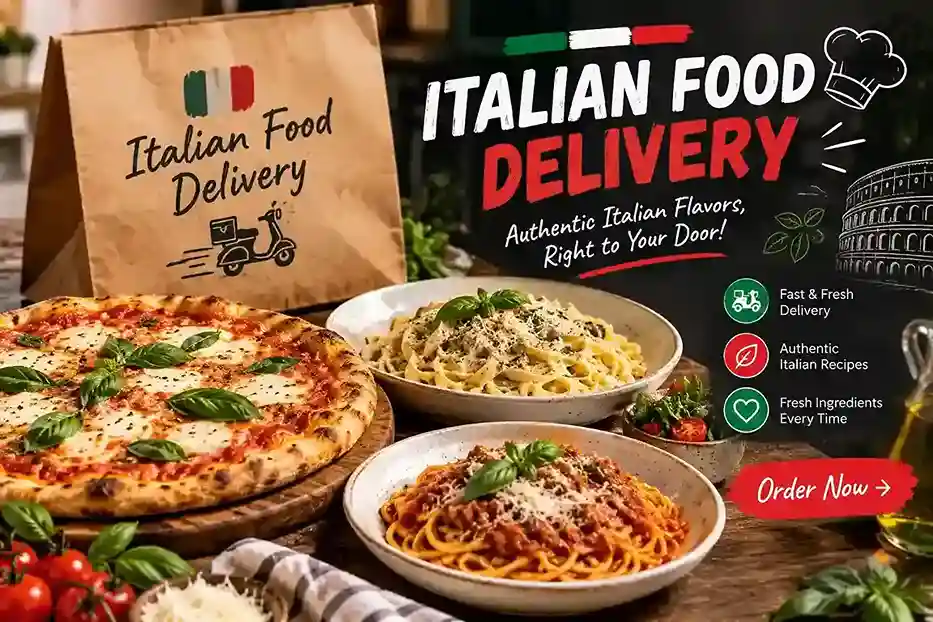
Italian food delivery should feel simple. Instead, many orders arrive with a soggy crust, lukewarm pasta, and sauce soaked through the bag. You pay full price for a dinner that lost its best qualities on the road. This guide shows you how to pick the right kitchen, order dishes that travel well, and fix problems fast.
What Is Italian Food Delivery and How Does It Work?
Italian food delivery is a service where an Italian restaurant, pizzeria, or trattoria sends cooked meals to your door. The restaurant may use its own drivers or a third-party app such as DoorDash, Uber Eats, or Grubhub. The chef prepares the food, a driver delivers it to you, and you place your order over the phone or online.
Each method has trade-offs. This is a comparison of the primary models:
| Model | Who Delivers | Best For |
| Restaurant’s own drivers | Restaurant staff | Hot pizza and local favorites |
| Third-party app | Independent couriers | Wide choice and easy tracking |
| Pickup (curbside) | You | Lowest cost, fastest handoff |
| Catering delivery | Restaurant or caterer | Parties and office lunches |
Why Do So Many People Choose Italian Food Delivery?
Italian menus offer comfort, variety, and shareable portions. A family can split a tray of baked ziti, a large pizza, and a salad without anyone feeling left out. Kids usually find something they like, and adults can order richer dishes.
Italian cuisine also covers a wide range of budgets. A weeknight pizza costs far less than a seafood linguine, yet both fit the same menu. That flexibility makes Italian food delivery a natural pick for family dinners, game nights, and quiet evenings in.
Which Italian Dishes Travel Best, and Which Should You Skip?
Heat, steam, and time change food. Dishes with sauce, cheese, or a firm structure hold up well. Delicate dishes lose texture within minutes.
| Dish | Travel Rating | Why | Smart Tip |
| Lasagna | Excellent | Layers hold heat and shape | Order extra sauce |
| Baked ziti | Excellent | Cheese seals in moisture | Eat within 30 minutes |
| Chicken parmigiana | Very good | Sauce protects the cutlet | Ask for sauce on the side |
| Meatballs | Very good | Dense and juicy | Pair with bread |
| Spaghetti | Good | Noodles keep warm in a deep tray | Request sauce separate |
| Pizza | Good | Travels in a vented box | Ask for a well-done bake |
| Calzone | Good | Dough traps steam and heat | Open a corner to release steam |
| Fettuccine Alfredo | Fair | Cream sauce thickens as it cools | Reheat with a splash of milk |
| Risotto | Poor | Turns gluey while waiting | Order it dine-in |
| Fried calamari | Poor | Steam softens the coating | Skip it or pick it up yourself |
Pro tip: Ask the restaurant to pack pasta and sauce in separate containers. You can combine them at home, and the noodles will stay firm.
How Do You Choose a Reliable Restaurant for Italian Food Delivery?
A great dining room does not always mean great delivery. Some kitchens pack orders carefully. Others rush them. Check these signals before you order:
- Recent reviews: Read comments from the last few weeks. Look for phrases like “on time,” “well packed,” and “arrived hot.”
- Photos from customers: Real photos show portion size and packaging better than polished menu images.
- Delivery radius: A restaurant within a short drive keeps food hotter than one across town.
- Health inspection record: Many local health departments publish inspection results online.
- Menu focus: A short, confident menu often signals a kitchen that does a few things well.
- Packaging notes: Some restaurants mention vented pizza boxes, sealed lids, and tamper-evident stickers.
Your local Google Business Profile and the restaurant’s own website give the most dependable details. Call the restaurant if the website leaves a question open.
Should You Order Direct or Through an App?
Restaurants pay commissions to delivery apps, so ordering direct can help the restaurant keep more of your money. Apps still offer tracking, saved payment details, and occasional promotions. Prices and fees differ from place to place, so compare both totals before you pay.
| Factor | Direct Order | Delivery App |
| Menu prices | Often matches the in-store menu | May include a markup |
| Fees | Restaurant sets them | App adds service fees |
| Tracking | Varies | Real-time map |
| Special requests | Easy by phone | Limited to a notes box |
| Support if something goes wrong | Restaurant handles it | App support handles it |
Compare the final total for your Italian food delivery before you tap pay. Check the subtotal, the delivery fee, the service fee, taxes, and the tip.
What Does Italian Food Delivery Really Cost?
The menu price is only part of the bill. Several add-ons stack up at checkout.
| Cost Item | What It Is | How to Lower It |
| Delivery fee | Charge for the driver’s trip | Choose a closer restaurant |
| Service fee | App’s operating charge | Order direct |
| Menu markup | Higher item prices on some apps | Compare with the restaurant’s own menu |
| Tip | Pay for your courier | Tip fairly, and plan for it in your budget |
| Small-order fee | Penalty for low totals | Combine items into one order |
Group your food into one order when possible. A single large order usually costs less per person than several small ones.
How Do You Keep Delivered Italian Food Safe and Hot?
Safe Italian food delivery starts with temperature. The U.S. Department of Agriculture advises keeping hot take-out and delivered food at 140°F or above and cold food at 40°F or below. Perishable food should go into the refrigerator within two hours of delivery.
The U.S. Food and Drug Administration and FoodSafety.gov offer the same core message: keep hot food hot, keep cold food cold, and avoid leaving meals in the “danger zone” between those temperatures.
| Situation | Safe Action |
| Food arrives hot | Eat soon, or keep it warm at 140°F or above |
| You eat later | Refrigerate within two hours |
| Cold items (salad, tiramisu) | Refrigerate right away |
| Leftover pasta or pizza | Store in shallow, covered containers |
| Doubt about freshness | Throw it out |
A food thermometer takes the guesswork out of warming and reheating. It costs little and works for every kitchen task.
How Do You Reheat Leftovers Without Ruining Them?
Microwaves heat fast but make crusts rubbery. Use the right tool for each dish. The USDA recommends reheating leftovers to 165°F.
| Dish | Best Method | Quick Note |
| Pizza | Hot skillet, lid on | Crisp bottom, melted top |
| Lasagna | Oven, covered with foil | Remove foil near the end for a golden top |
| Spaghetti | Pan with a splash of water | Stir often to loosen the noodles |
| Fettuccine Alfredo | Low heat with a little milk | Whisk to bring the sauce back |
| Garlic bread | Oven or air fryer | Avoid the microwave |
| Meatballs | Simmer in sauce | Keeps them juicy |
Can You Find Gluten-Free, Vegetarian, and Allergy-Friendly Options?
Yes, in most cases. Many Italian food delivery menus list vegetarian dishes, and some offer gluten-free pasta or pizza crust. Cheese, tomato, vegetable, and bean dishes give plenty of meat-free choices.
Allergies need extra care. Shared kitchens can pass trace allergens between dishes, a problem called cross-contact. Tell the restaurant about the allergy in the order notes, and call to confirm.
| Need | Menu Ideas | What to Ask |
| Vegetarian | Eggplant parmigiana, margherita pizza, pasta primavera | Is the sauce made with meat stock? |
| Vegan | Marinara pasta, vegetable pizza without cheese | Do you offer dairy-free cheese? |
| Gluten-free | Gluten-free pasta, risotto, salads | How do you prevent cross-contact? |
| Nut allergy | Simple tomato dishes | Does the pesto contain pine nuts or other nuts? |
| Dairy-free | Pasta aglio e olio, bruschetta | Is butter used in the sauce? |
How Much Should You Order for a Group?
Planning Italian food delivery for a group takes a little math. Use these starting points and adjust for appetites.
| Group Size | Entrées | Sides and Extras |
| 2 people | 2 entrées or 1 pizza plus a pasta | 1 salad |
| 4 people | 3 entrées, or 2 large pizzas plus 1 tray of pasta | 1 salad, 1 bread |
| 6 to 8 people | 4 to 5 entrées, or a catering tray | 2 salads, 2 breads |
| 10+ people | Catering trays | Order a few extra portions |
Family-style trays cost less per portion than individual plates. Ask the restaurant for serving spoons and extra plates.
Which Regional Italian Styles Should You Know?
Italy’s food varies sharply by region. Knowing a few terms makes menus easier to read.
| Region | Signature Dishes | Flavor Style |
| Naples (Campania) | Neapolitan pizza, spaghetti with clams | Simple, tomato-forward |
| Rome (Lazio) | Carbonara, cacio e pepe, supplì | Peppery, cheesy |
| Emilia-Romagna | Lasagna alla Bolognese, tortellini | Rich, meaty, creamy |
| Sicily | Arancini, caponata, cannoli | Sweet, sour, citrusy |
| Tuscany | Ribollita, bistecca alla fiorentina | Hearty, rustic |
| Liguria | Pesto Genovese, focaccia | Fresh, herbal |
Many restaurants blend these traditions with American-Italian classics like chicken parmigiana and spaghetti and meatballs. Both styles belong on the same menu.
What Mistakes Ruin an Order?
Avoid these errors, and your next Italian food delivery will go smoother:
- Ordering fragile dishes: Risotto and fried items lose quality fast.
- Skipping the notes box: Requests like “sauce on the side” cost nothing.
- Ignoring distance: A longer trip means cooler food.
- Forgetting the address details: Add gate codes, apartment numbers, and a phone number.
- Leaving food out too long: Refrigerate leftovers within two hours.
- Not checking the bag: Inspect the order before the courier leaves, if you can.
Your Next Step: Order Smarter Tonight
Great Italian food delivery comes down to a few smart choices. Pick sturdy dishes, choose a nearby kitchen, request sauce on the side, and keep hot food hot. Check the full price before you pay, and refrigerate leftovers fast.
Try one change at your next order. Ask for sauce on the side, or call the restaurant directly. Then share what worked with a friend who still eats soggy pizza.