Red Food Coloring: Types, Uses, Safety & What to Know
Introduction
Think red food coloring is just one ingredient? Think again. From bright candies and drinks to frostings and desserts, different red color additives can create similar shades while having very different sources, names, and regulations. This guide explains the major types, how they work, what food labels tell you, and what current U.S. regulatory information says about their use.
What Is Red Food Coloring?
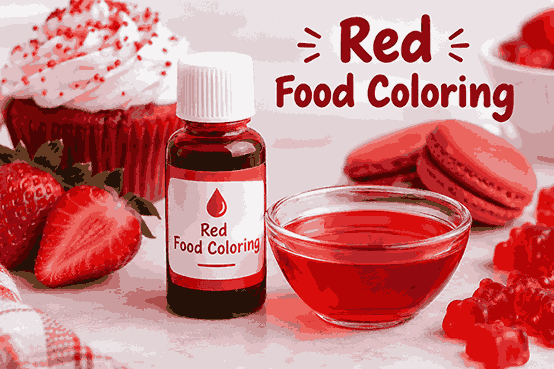
Red food coloring is a color additive used to give food a red, pink, cherry, or related shade. Depending on the ingredient, the color may come from a synthetic dye or a naturally derived source.
The FDA classifies color additives according to their regulatory status. Some require batch certification, while others are exempt from certification but still require approval for their intended food uses.
The term red food coloring therefore describes a category rather than one specific chemical.
Common examples include:
- FD&C Red No. 40
- FD&C Red No. 3
- Carmine and cochineal extract
- Dehydrated beet preparations
- Grape skin extract
- Other approved color additives from natural sources
What Are the Main Types of Red Food Coloring?
The simplest way to understand red food coloring is to separate synthetic certified colors from color additives derived from natural sources.
Synthetic red colors
FD&C Red No. 40, also called Allura Red AC, is a synthetic color additive. The FDA lists it as permanently approved with certification required for its use in foods, drugs, and cosmetics.
FD&C Red No. 3 is another synthetic color that produces a bright cherry-red shade. However, its regulatory status in the United States is changing: the FDA revoked its authorization for food use, with the food-use revocation taking effect January 15, 2027.
Naturally derived colors
Naturally derived options include dehydrated beets, grape skin extract, and carmine. The FDA lists these among color additives that are generally exempt from batch certification, although they remain subject to applicable approval and use requirements.
Red Food Coloring vs. Red 40: Are They the Same?
No. Red food coloring is a broad term, while Red 40 is one particular color additive.
Red 40 is also known as Allura Red AC and carries the regulatory designation FD&C Red No. 40 in the United States. FDA records identify its CAS number as 25956-17-6 and list food use under 21 CFR §74.340.
This distinction matters when reading ingredient labels. Seeing “red coloring” does not automatically tell you which specific substance was used.
Red Food Coloring vs. Red 3: What Changed?
Red 3 and Red 40 are different substances, despite both producing red shades.
The FDA announced in January 2025 that it was revoking authorization for FD&C Red No. 3 in food and ingested drugs. The agency cited the Delaney Clause and explained that the laboratory-animal findings involved a mechanism that does not occur in humans.
The current food deadline is January 15, 2027. Products manufactured before the effective date may still appear on the market afterward under the applicable transition rules.
Why Is Red Food Coloring Added to Food?
Manufacturers use red food coloring for more than decoration.
Color can:
- Make foods visually appealing
- Restore color lost during processing or storage
- Create a consistent appearance between batches
- Strengthen the expected visual identity of a flavor
- Give otherwise pale foods a recognizable appearance
- Produce colors that natural ingredients alone may not provide consistently
The FDA explains that color additives can compensate for color loss, correct natural variation, enhance existing colors, and provide color to foods that would otherwise be colorless.
Where Is Red Food Coloring Commonly Used?
The exact permitted use depends on the specific color additive and its regulation.
Examples of foods that may contain red coloring include:
- Candy
- Cereals
- Beverages
- Gelatin desserts
- Puddings
- Dairy products
- Frosting and icing
- Cakes and cupcakes
- Frozen desserts
For example, FDA information specifically lists FD&C Red No. 40 for uses including cereals, beverages, gelatins, puddings, dairy products, and confections.
Is Red Food Coloring Safe?
The answer depends on which color additive you mean and how it is used.
FDA-approved color additives must meet safety requirements for their intended conditions of use. The agency evaluates factors such as expected consumption, intended use, manufacturing process, and the substance’s physical and chemical properties.
That means it is inaccurate to treat every red coloring as identical. Each approved additive has its own regulatory specifications.
What about Red 40?
FD&C Red No. 40 remains listed by the FDA as a permitted certified color additive. FDA records state that its use in foods is subject to applicable requirements and good manufacturing practices.
What about Red 3?
Red 3 has a different regulatory story. The FDA has revoked its authorization for food use, with the effective date set for January 15, 2027.
Are Natural Red Food Colors Better?
“Natural” and “synthetic” describe the source or production of a color; they do not, by themselves, provide a complete safety assessment.
Naturally derived color additives can include beet preparations, grape skin extract, and carmine. FDA regulations still govern their use in foods.
Natural colors can also behave differently during cooking, storage, changes in acidity, and exposure to light. For manufacturers, choosing a color involves both regulatory requirements and technical performance.
What Natural Ingredients Can Make Food Red?
Several ingredients can provide red or reddish shades.
| Natural source | Typical color effect | Common consideration |
| Beet preparations | Red to bluish-red | Color can vary with conditions |
| Grape skin extract | Red to purple | Useful for deeper shades |
| Carmine/cochineal | Red to pink | Derived from insects |
| Certain fruit or vegetable sources | Red or pink | Shade depends on the source |
| Approved natural color additives | Varies | Must meet applicable regulations |
The FDA specifically identifies dehydrated beets, grape skin extract, and cochineal/carmine among color additives used as alternatives to synthetic colors.
How Do You Identify Red Food Coloring on a Label?
Reading the ingredient list is the easiest starting point.
In the United States, certified colors must generally be declared by their listed names or appropriate abbreviations. For example, a product can identify FD&C Red No. 40 as “Red 40.” Certain certification-exempt colors have different labeling requirements.
Look for terms such as:
- FD&C Red No. 40
- Red 40
- FD&C Red No. 3
- Carmine
- Cochineal extract
- Artificial color
- Color added
- Other named color additives
Always check the complete ingredient list rather than assuming that a food’s red appearance identifies the ingredient.
What Is the Difference Between Certified and Exempt Colors?
This is an important regulatory distinction.
| Feature | Certified colors | Certification-exempt colors |
| Typical source | Often synthetic | Often natural sources |
| Batch certification | Required for listed certified colors | Not required |
| FDA approval | Required | Required |
| Examples | Red 40 | Beet preparations, carmine |
| Label treatment | Specific naming requirements | Depends on the additive and rules |
| Main purpose | Consistent, intense color | Coloring with different source characteristics |
The FDA notes that certification-exempt does not mean unregulated. These color additives must still comply with their applicable identity, purity, and use requirements.
What Does “Allura Red AC” Mean?
Allura Red AC is another name for FD&C Red No. 40.
It is widely recognized in international food-additive systems and is identified by the number E129 in the European Union. EFSA’s food-colours information lists E129 as Allura Red AC and records its re-evaluation and subsequent exposure-assessment work.
This can help explain why the same coloring may appear under different names depending on the country.
Does Red Food Coloring Affect Children?
Questions about food colors and children’s behavior have received scientific and regulatory attention.
EFSA’s assessment of several food colors, including Allura Red AC, found that available evidence at the time did not establish a causal link between the individual colors and behavioral effects. EFSA also noted that high consumers could exceed the applicable acceptable daily intake for some colors.
Because food-color regulations and scientific assessments can change, parents should rely on current guidance from food-safety authorities rather than social-media claims or generalized statements about every food dye.
What Is the FDA Doing About Synthetic Food Colors?
U.S. policy is currently shifting toward greater use of naturally derived alternatives.
The FDA announced measures in 2025 and 2026 aimed at reducing petroleum-based synthetic colors in the U.S. food supply. The agency has also approved additional naturally derived color options, including beetroot red, although the effective date of the beetroot-red order was delayed in March 2026 while objections were evaluated.
The FDA has also stated that it is working with industry toward eliminating several remaining certified colors from the U.S. food supply by the end of 2027.
Red Food Coloring Safety: What Should Consumers Remember?
The smartest approach is to focus on the specific ingredient, not simply the word “red.”
Keep these points in mind:
- Red coloring is a category, not one ingredient.
- Red 40 and Red 3 are different color additives.
- Natural color additives exist alongside synthetic colors.
- FDA approval applies to specified conditions of use.
- Certification-exempt does not mean unregulated.
- Ingredient labels can help identify specific colors.
- Regulations can change, so check current government information.
- A food’s color alone cannot tell you which additive produced it.
Frequently Asked Questions
Is red food coloring the same as Red 40?
No. Red food coloring is a broad category, while Red 40 is one specific synthetic color additive.
What is Red 40 called in Europe?
Red 40 is known as Allura Red AC and is identified as E129 in the EU food-additive system.
Is Red 3 still allowed in U.S. food?
The FDA revoked its authorization for food use. The food-use revocation becomes effective January 15, 2027.
What are natural red food colors?
Examples include beet preparations, grape skin extract, and carmine/cochineal extract.
How can I tell if a product contains red coloring?
Check the ingredient list for names such as Red 40, FD&C Red No. 40, Red 3, carmine, cochineal extract, or other declared color additives.
Are approved food colors automatically safe in unlimited amounts?
No. Approval applies to specified conditions of use. Color additives are regulated according to their permitted uses and applicable limits or good manufacturing practices.
Final Thoughts: Make the Label Your Starting Point
Understanding red food coloring becomes much easier once you stop treating every red dye as the same ingredient. Red 40, Red 3, beet-based colors, carmine, and other color additives have different sources, properties, labeling requirements, and regulatory histories.
For consumers, the best action is simple: read the ingredient list, identify the specific color, and use current information from authoritative food-safety agencies when making decisions. For publishers and food brands, accurate terminology and transparent labeling create content that genuinely helps readers instead of adding to the confusion.