What Is Chai? The Complete Guide to India’s Spiced Tea
Introduction
Every café menu now lists “chai,” yet few explain it. Order the wrong one and you get a cup of sugary syrup instead of the real drink. So what is chai, and how do you order it, brew it, and enjoy it properly? This guide answers both questions. You will learn its history, spices, types, recipe, caffeine level, and health facts.
What Is Chai? A Plain-English Definition
Chai is the Hindi and Urdu word for tea. Across South Asia, the Middle East, and parts of East Africa, ordering “chai” simply means ordering tea. The word travelled from the Chinese word cha along old trade routes.
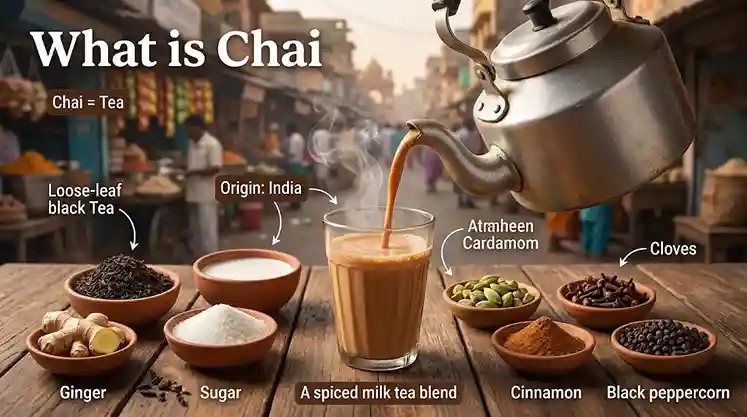
In English-speaking countries, the word means something narrower. It usually means masala chai, which translates to “spiced tea.” Cooks simmer black tea, milk, sweetener, and whole spices together in one pot.
So what is chai in everyday practice? It is a hot, creamy, aromatic drink and a daily ritual. Families serve it to guests within minutes of arrival. Office workers share it at 4 p.m. Truck drivers drink it from small glasses at roadside stalls.
Where Does Chai Come From? A Short History
Spiced drinks existed in India long before black tea arrived. Ayurvedic texts describe herbal decoctions made with ginger, cardamom, and pepper. People drank these blends for warmth and digestion, and they contained no tea leaves.
The tea story starts in the 1830s. British planters set up tea estates in Assam and later Darjeeling. Most of the leaves went abroad for export, and local people drank very little of it.
That changed in the early 1900s. The Indian Tea Association launched campaigns that handed out free brewed tea at railway stations and factories. Vendors then cut costs by adding milk, sugar, and cheap spices to stretch each leaf. This street recipe became masala chai.
Today India produces and drinks vast amounts of tea. The Tea Board of India tracks production, and the figures show how deeply tea runs through daily life.
| Period | Key Event |
| Ancient times | Spiced herbal drinks appear in Ayurvedic practice |
| 1830s | British tea estates open in Assam |
| Early 1900s | Free tea campaigns reach railway stations |
| Mid 1900s | Street vendors popularize milk-and-spice chai |
| 1990s onward | Chai spreads to Western cafés |
| Today | Bottled chai, concentrates, and instant mixes line store shelves |
What Is Chai Made Of? The Five Core Ingredients
A proper cup needs five parts. Change one, and the drink changes character.
- Black tea: Strong Assam or CTC (crush-tear-curl) leaves give body and color.
- Milk: Whole milk adds richness and softens the bitter edge.
- Water: Water carries the flavor and sets the strength.
- Sweetener: Sugar, jaggery, or honey balances the spices.
- Spices: Whole or ground aromatics build the signature taste.
The ratio matters. Many households use roughly equal parts water and milk. Street vendors often use more milk for a heavier cup.
| Ingredient | Role | Common Substitute |
| Assam CTC tea | Strong base flavor | English Breakfast |
| Whole milk | Creamy texture | Oat or soy milk |
| Sugar | Sweetness | Jaggery, honey |
| Fresh ginger | Heat and zing | Dry ginger powder |
| Cardamom pods | Floral aroma | Ground cardamom |
The Spices Inside Masala Chai
Chai spices define the drink. Each one plays a different part, and families guard their own blends like secrets.
| Spice | Flavor | Why Cooks Use It |
| Green cardamom | Sweet, floral | The signature chai aroma |
| Fresh ginger | Sharp, warm | Adds heat and clears the head |
| Cinnamon or cassia | Sweet, woody | Rounds out the sweetness |
| Cloves | Strong, medicinal | Adds depth in small doses |
| Black peppercorn | Hot, earthy | Gives a gentle kick |
| Fennel seeds | Mild licorice | Softens the blend |
| Star anise | Licorice | Used in some regional blends |
Start small. Cloves and pepper overpower a pot fast. A good rule is two cardamom pods, one thin ginger slice, one small cinnamon piece, and one clove per cup.
Crush whole spices just before brewing. Pre-ground powders lose their oils within weeks, and the cup tastes flat as a result.
Types of Chai Around the World
India alone offers dozens of styles. The question “what is chai” has a different answer in Mumbai than in Srinagar.
Regional styles:
- Masala chai: The classic spiced milk tea found across India.
- Cutting chai: A half-glass serving sold in Mumbai, small, strong, and cheap.
- Kashmiri chai (noon chai): A pink, salty tea made with green tea leaves and baking soda.
- Sulaimani chai: A Kerala black tea with lemon and no milk.
- Irani chai: A rich, milky brew from Hyderabad’s old Irani cafés.
- Kadak chai: A very strong version brewed longer.
Western styles:
- Chai latte: Steamed milk mixed with chai concentrate or syrup.
- Dirty chai: A chai latte with a shot of espresso.
- Iced chai: Cold chai poured over ice.
| Type | Region | Key Trait |
| Masala chai | All India | Milk, tea, spices |
| Cutting chai | Mumbai | Small, strong portion |
| Noon chai | Kashmir | Pink, salted |
| Sulaimani | Kerala | No milk, lemon |
| Irani chai | Hyderabad | Thick, creamy |
| Chai latte | West | Syrup-based, sweeter |
How to Make Chai at Home: A Simple Recipe
You need no special equipment. A small saucepan and ten minutes will do. Here is the method that works for me every time.
Ingredients (2 cups):
- 1 cup water
- 1 cup whole milk
- 2 teaspoons loose Assam black tea
- 4 green cardamom pods, lightly crushed
- 1 inch fresh ginger, sliced
- 1 small cinnamon stick
- 2 cloves
- 2 teaspoons sugar, or to taste
Steps:
- Add water, ginger, cardamom, cinnamon, and cloves to the pot.
- Bring the water to a rolling boil and let it bubble for two minutes.
- Add the tea leaves and simmer for one minute.
- Pour in the milk and raise the heat.
- Watch the pot. When the foam climbs toward the rim, lower the heat for a few seconds, then let it rise once more.
- Stir in the sugar.
- Strain into two cups and serve hot.
Pro tips:
- Use a wide pot to prevent boil-overs.
- Simmer longer for a stronger cup.
- Add the milk after the tea, never before.
Now that you know what is chai at its simplest, you can adjust each part. Add less ginger in summer, or more pepper in winter.
Chai vs. Chai Latte vs. Regular Tea
People mix these drinks up all the time. The differences are clear once you see them side by side.
| Feature | Masala Chai | Chai Latte | Plain Black Tea |
| Method | Simmered in the pot | Steamed milk and concentrate | Steeped in hot water |
| Spices | Fresh, whole | Often syrup or powder | None |
| Sweetness | Adjustable | Usually high | Adjustable |
| Milk | Brewed with tea | Added after | Optional |
| Typical strength | Bold | Mild | Medium |
A chai latte at a chain café often contains far more sugar than a homemade cup. Check the nutrition label or ask the barista for less syrup. A homemade chai lets you control the sweetness completely.
Does Chai Have Caffeine?
Yes. Chai contains caffeine because black tea is its base. The amount depends on how much tea you use and how long you brew it.
A cup of masala chai usually holds roughly 25 to 50 milligrams of caffeine. Plain black tea often lands between 40 and 70 milligrams per cup, and brewed coffee averages around 95 milligrams. Milk dilutes the tea, which lowers the caffeine per serving.
| Drink (8 oz) | Approximate Caffeine |
| Brewed coffee | 95 mg |
| Black tea | 40 to 70 mg |
| Masala chai (home brewed) | 25 to 50 mg |
| Chai latte (café) | 40 to 80 mg |
| Herbal tea | 0 mg |
Many people asking what is chai also want a gentler caffeine boost than coffee gives them. Chai fits that goal well. Pregnant readers and people sensitive to caffeine should check with a doctor first.
For exact nutrient data on tea, search the USDA FoodData Central database.
Health Benefits of Chai: What the Evidence Says
Chai carries a warm reputation, so separate the facts from the folklore. Black tea contains plant compounds called flavonoids. Ginger, cardamom, and cinnamon have long histories in traditional medicine.
What research supports
- Ginger may ease mild nausea.
- Black tea provides antioxidants.
- A warm drink can feel calming and aid relaxation.
- Homemade chai lets you control sugar and milk.
What research does not prove
- Chai does not cure disease.
- Chai does not replace medicine.
- No spice makes you lose weight by itself.
The National Center for Complementary and Integrative Health (NCCIH) publishes plain-language summaries on ginger and herbal products. Read those pages before you rely on any home remedy.
Watch these risks
- Heavy sugar adds calories quickly.
- Too much caffeine can disturb sleep.
- Strong tea can reduce iron absorption when you drink it with meals.
Moderation works best. One or two cups a day suits most healthy adults.
How to Buy or Order Good Chai
Quality varies wildly. A few simple checks save you money and disappointment.
When buying loose tea or blends
- Look for whole spices in the ingredient list.
- Choose Assam or CTC tea for a strong cup.
- Skip blends that list “natural flavors” first.
- Check the packing date, and buy small batches.
When ordering at a café
- Ask if they brew fresh or use concentrate.
- Request less sweetener, since many cafés default to very sweet.
- Specify whole milk or your preferred plant milk.
| Buying Option | Best For | Watch Out For |
| Loose-leaf blend | Flavor lovers | Needs a strainer |
| Tea bags | Convenience | Weaker spice taste |
| Concentrate | Quick lattes | High sugar |
| DIY spice mix | Full control | Needs prep time |
Common Chai Mistakes and How to Fix Them
Most bad cups come from the same few errors.
- Boiling the milk too hard. Hard boiling scorches the flavor. Control the heat as the foam rises.
- Using weak tea. Mild tea disappears under spice and milk. Pick a bold black tea.
- Adding every spice at once. Cloves and pepper dominate fast. Measure carefully.
- Skipping the simmer. Spices need time to release oils. Give them at least two minutes in water first.
- Using stale ground spices. Old powder tastes dusty. Crush whole spices fresh.
- Over-sweetening. Add sugar last, and taste before you add more.
Chai Culture and Etiquette
Chai is more than a drink in South Asia. It is a social habit with unwritten rules.
- Hosts offer chai to every guest, and refusing can feel impolite.
- Vendors, called chaiwallahs, often remember regular customers’ preferred strength.
- Many people pair chai with biscuits, rusk, or fried snacks like pakoras.
- Clay cups called kulhads give street chai its earthy taste, and people discard them after use.
Understanding these customs shows what is chai at its heart: hospitality in a cup. If a friend serves you chai, accept it, sip slowly, and enjoy the conversation.
Start Your Chai Habit Today
You now know what is chai, where it came from, and how to brew it right. The best next step takes ten minutes. Pick up a small pack of Assam tea and whole cardamom pods, then follow the recipe above tonight.
Try one change each week. Adjust the ginger, swap the sweetener, or test a new regional style. Share your favorite blend with a friend, and ask them to share theirs. Chai tastes best when you pass it around.